Think about this: your main server goes down because of a hardware breakdown, a ransomware assault, or a serious system corruption. The operating system, applications, and settings are all gone, but your data is safe. If you have to rebuild everything by hand, it could take days or even weeks, and your firm will lose time, money, and client trust.
This is when Bare Metal Recovery (BMR) really comes in handy.
In this in-depth article, we’ll explain what bare metal recovery is, how it works, and why it’s important for enterprises of all sizes. This blog will give you clear information, real-world examples, and useful tips on how to secure your systems, whether you’re an IT professional, a business owner, or just starting to learn about disaster recovery tactics.
What is bare metal recovery?
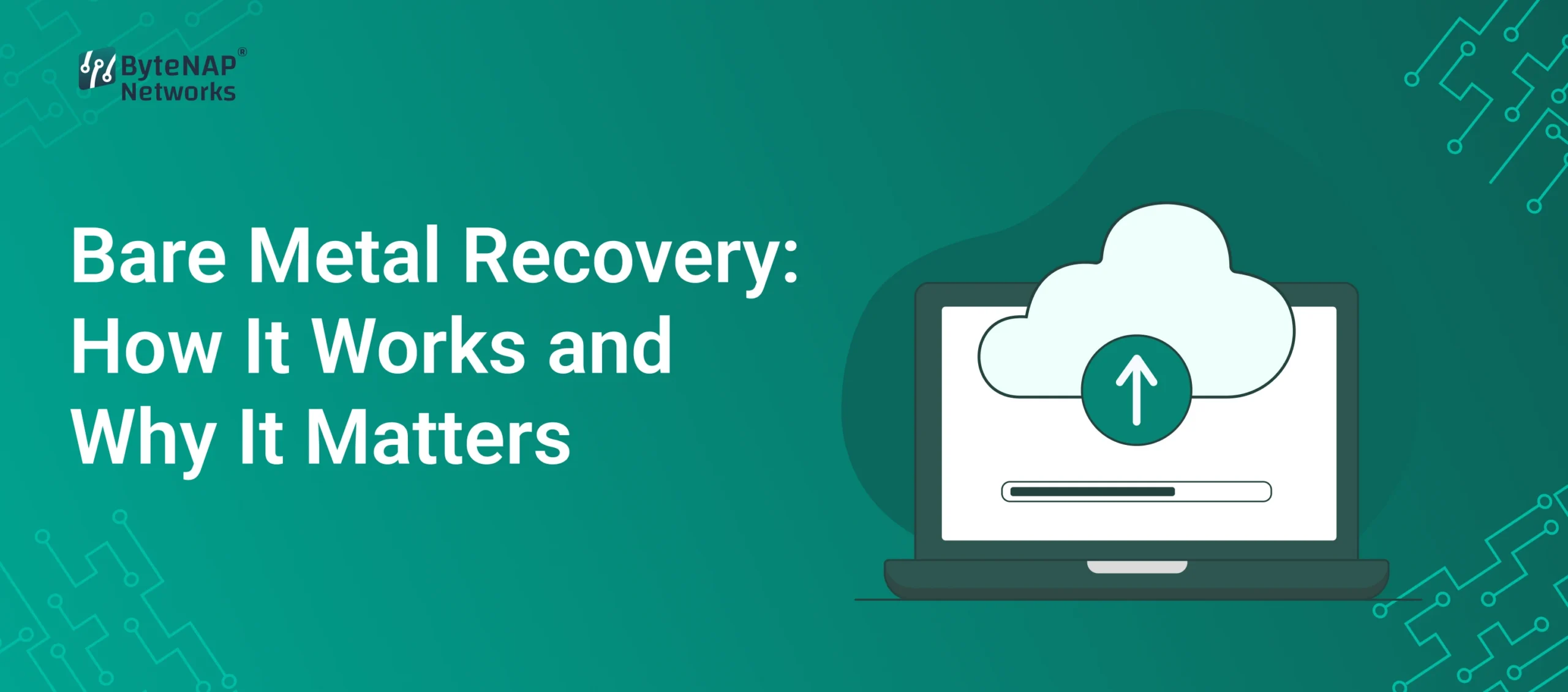
When a catastrophic failure happens, Bare Metal Recovery (BMR) is the process of putting a whole system back on a blank or “bare metal” machine. This includes the operating system, applications, system settings, and data.
Bare metal recovery lets you reconstruct a whole system from the beginning without having to reinstall the operating system or software by hand, unlike file-level or application-level restores.
To put it simply:
Bare metal recovery brings back:
- Operating system (Linux or Windows)
- Settings and drivers for the system
- Apps that are already installed
- Files and data about users
A single, smooth process for everything.
What does “bare metal” recovery mean?
A “bare metal” machine is one that doesn’t have an operating system installed; it’s just raw hardware. After things like:
- Failure of the hard drive
- Attacks with ransomware
- Corruption of the server
- Disasters in data centres
Your system can end up with nothing but broken hardware. BMR puts everything back to life.
Step-by-Step Guide on How Bare Metal Recovery Works
You can see why bare metal recovery is such a powerful disaster recovery solution if you understand how it works.
Step 1: Make a complete backup of the system
Before anything bad happens, a full image backup of the system is made. This includes:
- OS
- Files for booting
- Uses
- How to set up your system
- Information
People usually keep these backups on:
- Drives from outside
- Network-attached storage (NAS)
- Storage in the cloud
Step 2: Start up from the Recovery Media
When something goes wrong, the system starts up with:
- A CD or DVD for recuperation
- Drive for recovery on USB
- Recovery environment based on a network
This recovery DVD starts the process of restoring bare metal.
Step 3: Find the Hardware
The environment for recovery:
- Finds new or old hardware
- Loads the drivers that are needed
- Gets discs ready for restoration
Modern BMR solutions allow you to restore to hardware that is not the same as the original system.
Step 4: Get the System Image Back
The bare metal machine gets the backup image, which restores:
- Operating system
- Uses
- Setups
- Information
There is no need to install anything by hand.
Step 5: Restart and get back to work
After it has been fixed:
- The system restarts
- Final changes to the hardware are made.
- The system goes back to normal functioning.
There is less downtime, usually only a few hours instead of days.
Bare Metal Restore Process vs Traditional Recovery
| Feature | Traditional Restore | Bare Metal Recovery |
| OS Reinstallation | Manual | Automatic |
| Time Required | High | Low |
| Human Error Risk | High | Minimal |
| Hardware Flexibility | Limited | High |
| Disaster Readiness | Partial | Complete |
Bare metal recovery is designed for worst-case scenarios, not just minor data loss
Real-World Example: Bare Metal Recovery in Action
Scenario: Ransomware Attack on a Small Business
A mid-sized eCommerce business was hit by ransomware that locked up their server OS and apps.
Without BMR:
- Reinstalling the OS takes 4 to 6 hours.
- Setting up the application: 1–2 days
- Data recovery: More time
- Total time down: 3 days or more
With Bare Metal Recovery:
- Media for boot recovery
- Restore a backup image that is clean
- Start operations again
Total time down: less than 3 hours
The company saved thousands of dollars in missed sales and kept customers’ trust.
Important Benefits of Bare Metal Recovery
1. Faster recovery from disasters
BMR cuts recovery time goals (RTOs) by a lot by restoring everything in one step.
2. Full System Restoration
You’re not simply recovering data; you’re restoring the whole environment to how it was.
3. Less Mistakes by People
Automated recovery cuts down on mistakes that happen a lot during manual rebuilds.
4. Independence from hardware
Restore systems even if the original hardware isn’t available or is out of date.
5. Perfect for following the rules and keeping the business going
BMR helps to meet:
- Plans for keeping a business running (BCP)
- Policies for disaster recovery (DR)
- Requirements for following the rules
Who Needs to Recover Bare Metal?
Bare metal recovery isn’t just for big businesses
It’s important for:
- Businesses of all sizes
- Data centres and companies that host websites
- Managed service providers (MSPs)
- Businesses have systems that are vital to their mission
- Companies that work with private information
If downtime hurts your business’s reputation, income, or operations, BMR is not an option.
Some common uses for bare metal recovery are
- Crashes of servers or hardware
- Corruption of the operating system or failed updates
- Attacks with malware or ransomware
- Moving to new hardware
- Data centre outages
- Restores from the cloud to the server
The best ways to make a bare metal recovery strategy work
1. Set up regular full backups
Make sure that backups of the system image are:
- Automatic
- Often
- Checked for honesty
2. Check to see if your bare metal restore process works.
A backup is pointless if you can’t get it back. Do test restores every so often.
3. Keep backups safe
Use:
- Storage off-site
- Backups in the cloud
- Backup locations that are encrypted
4. Keep recovery media safe
Always keep:
- Updated images of recovery
- Drivers that work with newer hardware
5. Write down the steps for recovery
Clear documentation speeds up recovery, even when important IT staff members are not present.
What is the difference between bare metal recovery and backup?
Backing up is making copies of data.
Restoring the whole system environment is what bare metal recovery means.
Think of backup as the parts and BMR as the whole recipe that makes the meal exactly the same as it was before.
Questions That Are Often Asked (FAQs)
1. Is system imaging the same as bare metal recovery?
System pictures are used in bare metal recovery, but it goes a step further by putting them back on a brand-new machine.
2. Can bare metal recovery work with different kinds of hardware?
Yes. Most contemporary systems let you restore data without having to worry about hardware.
3. How long does it take to recover bare metal?
It usually takes a few minutes to a few hours, but it depends on the magnitude of the data and the complexity of the system.
4. Is bare metal recovery a good option for cloud environments?
Yes, for sure. A lot of cloud and hybrid recovery solutions let you restore bare metal.
5. Do small enterprises really need to restore bare metal?
Yes. BMR is very important because small businesses are the ones that suffer the most from downtime and data loss.
Why Bare Metal Recovery is Very Important
Downtime is more than just a hassle now; it’s a risk to your organisation. Cyberattacks, hardware failures, and natural disasters are happening increasingly often. Businesses need a recovery solution that is quick, dependable, and covers everything.
Bare metal recovery makes sure:
- Staying in business
- Little time off
- Responding to disasters faster
- Relaxation
It’s not only about fixing systems; it’s also about restoring trust.
Last Thoughts and a Call to Action
One of the best tools for modern disaster recovery planning is bare metal recovery. You can keep your organisation from having major problems and long periods of downtime by learning how the bare metal recovery process works and using it effectively.
Do you want to make your disaster recovery plan stronger?
Look into enterprise-level backup and bare metal recovery options, or talk to a recovery professional today to protect your systems before something bad happens.