Blog

  • Virtualization in Cloud Computing: Types & Key Benefits

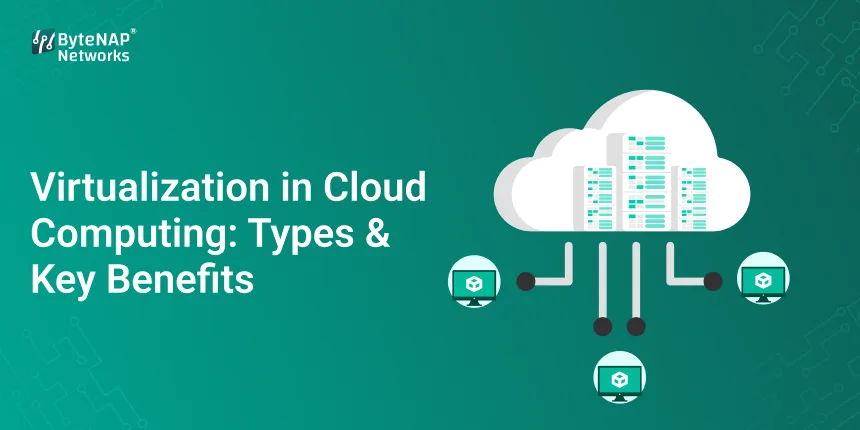
    Virtualization in Cloud Computing: Types & Key Benefits

    virtualization in cloud computing:

    Different Types of Virtualisation in Cloud Computing and Their Main Benefits

    You could launch a new program, deal with unexpected traffic spikes, or run many systems without having to buy additional servers or worry about hardware breaking down. Does that sound like magic? No, it isn’t. Virtualisation is what cloud computing employs to do its function.

    For many businesses, cloud computing can appear complicated and daunting at first. Words like “virtual machines,” “hypervisors,” and “containers” can be hard to understand if you’re new to technology. This blog is meant to make things easier. By the end, you’ll know exactly what virtualisation in cloud computing is, how it works, the different types of virtualisation in cloud computing, and why this technology is so vital for modern IT.

    Let’s go over it one step at a time.

    What does it mean to virtualise on the cloud?

    The primary principle underlying virtualisation in cloud computing is to utilise software to create virtual duplicates of real computer resources, such as servers, storage, networks, or operating systems.

    With cloud virtualisation, one physical server can run multiple virtual machines (VMs), each with its own operating system and programs. This is not the same as having one server execute one application.

    A simple comparison

    • You can conceive of a physical server as a building with several apartments.
    • Each flat is like a computer in a virtual world.
    • Tenants live in the same building, although they don’t share a space.
    • If one flat has a problem, the other flats are not affected.
    • Virtualisation in cloud computing means sharing resources while keeping environments separate.

    The foundation of cloud computing is virtualisation.

    Without virtualisation, cloud platforms wouldn’t be able to grow, save money, or be flexible.

    What virtualisation lets you do:

    • Giving out resources when needed
    • Cloud environments with more than one tenant
    • Setting up apps quickly
    • Better usage of hardware

    In short, cloud virtualisation technology makes it possible to use the cloud.

    How to Use Virtualisation in Cloud Computing (Step by Step)

    You don’t have to be a computer guru to understand how virtualisation works in the cloud. Here’s a quick breakdown:

    Step 1: Set up the gear in real life

    Cloud providers put fast physical servers in their data centers.

    Step 2: Set up the hypervisor

    There is virtualisation software called a hypervisor on each server. Here are some well-known hypervisors:

    • ESXi from VMware
    • Microsoft’s Hyper-V
    • KVM

    The hypervisor is the most crucial portion of the technology that makes cloud virtualisation work.

    Step 3: Creating Virtual Machines

    The hypervisor divides real resources like CPU, RAM, and storage into separate virtual environments.

    Step 4: Handing away resources

    Each VM has its own resources and runs by itself.

    Step 5: The Layer for Managing the Cloud

    Users can manage virtual resources with cloud dashboards, APIs, or automated tools.

    This whole thing is a real-life example of how cloud computing uses virtualisation.

    There are different types of virtualisation in cloud computing.

    One of the most important things to accomplish is learn about the different kinds of virtualisation that are used in cloud computing. Each type has its own purpose.

    1. Making a server virtual

    This is the most common approach to employ virtualisation in the cloud.

    What it does:

    Turns one real server into a number of virtual servers

    Pros:

    • Better usage of hardware
    • Infrastructure costs went down.

    For instance, a startup uses different VMs on the same physical server to host its website, database, and email server.

    2. Making storage virtual

    Storage virtualisation takes the physical storage of several devices and puts it all into one virtual storage system.

    The main benefits are:

    • It’s easier to back up and restore.
    • More solutions for storage that are versatile

    Many companies that work with a lot of data use this cloud virtualisation technology.

    3. Making networks virtual

    Network virtualisation makes real networking devices like routers and switches less necessary.

    How to use:

    • VPNs, which stand for “virtual private networks,”
    • Software-defined networking (SDN)
    • Virtualisation makes cloud computing safer and more flexible.

    4. Making the desktop virtual

    When you utilise desktop virtualisation, the desktops of users run on servers that are not in the same room as the users.

    For example, IT teams let people who work from home use computers that are not in the office.

    This is one of the greatest kinds of virtualisation for people that use cloud computing.

    5. Making Applications Virtual

    Apps run in distinct areas and don’t need to be loaded on devices directly.

    Pros:

    • Less issue with compatibility
    • Updates are easier
    • Another amazing method to employ virtual cloud technologies.

    6. Virtualisation at the OS level (using containers)

    Containers virtualise the operating system instead of the hardware.

    Popular tools:

    • Docker
    • Kubernetes

    Containers are lightweight and work well with current DevOps in the cloud computing environment of virtualisation.

    A Real-Life Example of How Virtualisation Works

    Case Study: Growing an Online Store

    A lot of people visit an Indian e-commerce site over the holidays.

    Before virtualisation:

    • One server in real life
    • When there is a lot of traffic, websites go down.
    • Hardware upgrades that cost a lot
    • After employing virtualisation in the cloud:
    • A few virtual machines handle the web, the database, and payments.
    • Automatically growing when there is a lot of traffic
    • Costs for infrastructure drop by 40%.

    This is what cloud virtualisation technology can actually do.

    The major benefits of using virtualisation in the cloud

    Let’s find out why businesses throughout the world adopt cloud virtualisation.

    1. Cost-effectiveness

    • Fewer physical servers
    • Costs of maintenance are reduced.

    2. The chance to grow

    • You can instantly add or take away resources.
    • Good for both small and large businesses

    3. High Availability

    • The other VMs keep working even if one quits.
    • More time up

    4. More safety

    • Places that are cut off from the rest of the world are less dangerous.
    • Safe infrastructure for more than one tenant

    5. Faster Deployment

    • Start servers in a matter of minutes
    • Development cycles that go faster

    Every benefit illustrates how crucial it is to use different types of virtualisation in cloud computing right now.

    How to Fix Common Problems

    • Cloud computing’s virtualisation is strong, however it also has several issues.
    • More work for better performance
    • Solution: Choose the best hypervisors and keep an eye on how they are using resources.
    • Security that isn’t set up right
    • Solution: Set up the necessary access controls and keep an eye on things.
    • Tough for Newbies
    • Learn as you go with managed cloud services.
    • The Right Way to Use Cloud Virtualisation Technology

    Here are some things you need to perform if you want to use virtualisation in cloud computing:

    • Choose the right kind of cloud computing virtualisation for your needs.
    • Check performance on a regular basis
    • Set up backups and recovery from disasters to happen automatically.
    • Make sure to keep your virtualisation software up to date.
    • Show your staff how to use the cloud the right way.
    • The future of virtualisation in the cloud
    • The future looks bright for cloud virtualisation technology:
    • Using AI to make the most use of resources
    • Computing without a server
    • More people using containers

    Virtualisation will remain be the key driver of new ideas in cloud computing, even as cloud platforms shift.

    Questions and Answers (FAQs)

    1. What does it mean to make anything virtual in cloud computing?

    Virtualisation in cloud computing is the process of producing virtual copies of real computing resources so that they work better, can be used by more people, and cost less.

    2. Why is cloud virtualisation technology so important?

    You can share resources, develop environments that can grow, and keep them safe for many people with cloud virtualisation technology.

    3. What are the main types of virtualisation used in cloud computing?

    The main types of virtualisation in cloud computing are server, storage, network, desktop, application, and OS-level virtualisation.

    4. Is it safe to use virtualisation on the cloud?

    Yes, virtualisation in cloud computing can provide strong security and privacy if it is set up appropriately.

    5. Can virtualisation be useful for small businesses?

    Sure. Cloud computing virtualisation helps small businesses save money and grow easily.

    Last Thoughts: Why Virtualisation Is More Important Than Ever

    If you operate a startup, manage enterprise IT, or are simply learning the basics of the cloud, you need to know about virtualisation in cloud computing. It gives modern digital businesses the freedom, growth potential, and strength they need.

    By choosing the right kind of virtualisation in cloud computing and leveraging the latest cloud virtualisation technology, you may make systems that are smarter, faster, and less expensive. Are you ready to start?

    Check out cloud platforms that provide good virtualisation tools, or talk to one of our cloud specialists about how to construct the finest virtualised infrastructure for your organization.

    Today is the day to start using the cloud!
  • Windows VPS Provider for Secure & High-Performance Hosting

    Windows VPS Provider for Secure & High-Performance Hosting

    If your apps demand Windows-specific technologies, consistent performance, and enterprise-level security, you probably already know that shared hosting isn’t good enough anymore. Your business could be affected by slow speeds, restricted control, and security problems without you even knowing it.

    At this point, it’s very vital to pick the right Windows VPS service.

    In this detailed guide, we’ll talk about what a Windows VPS is, why it’s crucial to find a reliable Windows VPS hosting provider, and how managed Windows VPS services can help you receive safe, high-performance hosting without having to do any extra work. This blog will help you make a good choice, no matter if you’re a developer, a business owner, or an IT decision-maker.

    What is a Windows VPS?

    A Windows VPS (Virtual Private Server) is a virtual server that runs on Windows and gives you your own CPU, RAM, and storage space.

    • A Windows VPS provider makes sure that:
    • Resources just for your apps
    • Full access to the admin panel (RDP)
    • Support for Windows-based software including IIS, ASP.NET, and MSSQL
    • More safety and space to grow

    With a reliable Windows VPS hosting service, you can have the power of a dedicated server for a lot less money.

    Why it’s crucial to choose the proper Windows VPS provider

    VPS solutions are not all the same. A terrible Windows VPS provider could make your server go down, make it run slowly, and leave security gaps.

    A decent Windows VPS hosting company does the following:

    • Always the same amount of uptime
    • Optimised Windows environments
    • Good enough security for corporations
    • Infrastructure that can get bigger

    The provider you choose has a direct effect on how well your business runs, how happy your customers are, and how well it grows over time if it relies on Windows workloads.

    How Windows VPS Hosting Works

    A Windows VPS provider uses virtualisation technology to split a powerful physical server into multiple independent virtual servers.

    All Windows VPSs come with:

    • Dedicated cores for the CPU
    • RAM that is not being used
    • Separate storage
    • Windows OS License

    Access to the Remote Desktop Protocol (RDP)

    Managed Windows VPS services take care of backups, updates, security patches, monitoring, and other tasks for you. This saves you time and decreases your risk.

    1. One of the most crucial things to look for in a good Windows VPS hosting service is dedicated performance resources.

    A good Windows VPS provider makes sure that your server resources aren’t shared, which keeps performance stable even when a lot of people are using it.

    2. Better security

    The finest managed Windows VPS services have firewalls, DDoS protection, virus scanning, and security updates every month.

    3. Full Control of Administration

    With a Windows VPS service, you have full control over your server environment, so you can make it exactly how you want it.

    4. Can be made bigger on request

    As your business grows, a solid Windows VPS hosting firm makes it easy to add more CPU, RAM, or storage.

    5. Compatible with Windows

    A Windows VPS can run all Microsoft programs, such as IIS, .NET, MSSQL, and remote desktop software.

    How to Choose the Best Windows VPS Provider in Steps

    Step 1: Decide what you want to do

    Make sure you know what you need before you pick a Windows VPS service:

    • Websites that use Windows are hosted by
    • Using software for ERP or CRM
    • Remote desktop solutions
    • Making apps and testing them

    This helps you choose the right service level and setup.

    Step 2: Decide if you want a managed or unmanaged VPS.

    Most decent Windows VPS hosting companies give you two options:

    • VPS without management: You are in charge of everything, but you have to do it all yourself.
    • Managed Windows VPS services: The service provider handles upgrades, maintenance, and security.
    • Managed Windows VPS services are worth more and give businesses more peace of mind.

    Step 3: Check out the infrastructure and how well it works

    Look for a Windows VPS service that offers:

    • Storage on NVMe or SSD
    • Good CPUs
    • More cloud infrastructure

    These are needed for hosting that is safe and quick.

    Step 4: Check that everything is secure and up to code.

    A good Windows VPS service should have:

    • Regularly patching the OS
    • Get safe RDP access
    • Putting data in code

    Choices for backing up and getting back on track after a disaster

    Step 5: Look over the SLA and the help

    You need to be able to get help 24/7 and know that your Windows VPS hosting service will always be up and running.

    How to Use Windows VPS to Grow a Business App in the Real World

    A medium-sized business that used a custom ASP.NET app experienced difficulties with performance when it was hosted on shared servers. When things were busy, downtime harmed both sales and users.

    After migrating to a Windows VPS provider that takes care of Windows VPS services:

    • The time it took for apps to respond dropped by 45%.
    • There was almost no downtime left.
    • It was simple to be in line with security rules.

    This shows that the right Windows VPS provider can directly affect how well a firm does.

    Why You Should Pick a Windows VPS Provider

    1. Great Performance

    When you utilise a trusted Windows VPS hosting provider, dedicated resources make sure that performance is always stable.

    2. More safety

    Thanks to isolation and strong security features, your apps and data are protected.

    3. Cost-Effectiveness

    A Windows VPS provider gives you the same performance as a genuine server, but for less money.

    4. Power and Freedom

    You can quickly add custom apps, build up services, and grow.

    5. Easier to Handle

    You can focus on your business while experts take care of the server when you choose managed Windows VPS services.

    Who Should Get Managed Windows VPS Services?

    Managed Windows VPS services are perfect for:

    • Businesses that don’t have IT professionals on hand
    • Companies that need hosting that is ready for compliance
    • People that produce programs for Windows
    • Using RDP for scenarios when you work from home

    Using a Windows VPS provider that offers managed services makes things easier and lessens the chance of difficulties.

    Things to Stay Away From When Choosing a Windows VPS Provider

    • Choosing the least expensive option without checking how well it works
    • Not paying attention to security and backup features
    • Not thinking about how much growth might be needed in the future
    • Picking unmanaged hosting without knowing anything about technology
    • You may avoid these concerns by using a good Windows VPS hosting firm.
    • The Best Ways to Host a Windows VPS with High Performance
    • Get the latest version of Windows
    • Change the settings for IIS and your app to make them better.
    • Check on how resources are being used often
    • Make strong guidelines for RDP security
    • Make backups happen automatically

    These ideas will help you get the most of your Windows VPS provider.

    Questions and Answers: Windows VPS Service Provider

    1. What does it mean to be a vendor of Windows VPS?

    A Windows VPS provider gives you access to virtual private servers that run Windows and have their own resources.

    2. Is a Windows VPS better than shared hosting?

    Yes, a Windows VPS service gives you more control, better performance, and better security than shared hosting.

    3. What are managed Windows VPS services?

    For managed Windows VPS services, the supplier handles setting up the server, upgrading it, keeping it safe, monitoring it, and giving technical assistance.

    4. Can I make my Windows VPS bigger later?

    Yes, a reputable Windows VPS hosting business makes it easy to add extra resources as you need them.

    5. Is it secure to use a Windows VPS?

    When you host it with a trustworthy Windows VPS provider, it has strong isolation, firewall protection, and regular security updates.

    Why you should choose a trustworthy Windows VPS hosting company

    In today’s digital world, where performance is everything, your hosting environment can either help you succeed or keep you from doing so without you ever knowing it. You can be sure that your business will be safe, quick, and able to develop over time when you choose the right Windows VPS service.

    With a good Windows VPS hosting provider and optional managed Windows VPS services, you may get the right mix of control, performance, and peace of mind.

    Are you ready to choose the best Windows VPS provider?

    If you want:

    • Hosting that is safe for Windows-based systems
    • Always great performance
    • Infrastructure that can expand
    • Solutions overseen by professionals

    Today, look for a reliable Windows VPS hosting firm. Get Windows VPS services that are professionally handled right now Use a trustworthy Windows VPS provider to run your programs with confidence.

  • Server Solutions: Custom & Scalable Options for Businesses and Enterprises

    Server Solutions: Custom & Scalable Options for Businesses and Enterprises

    A Brief Introduction

    Businesses of all sizes depend on their IT infrastructure and web presence a lot in today’s fast-paced digital environment. If your website is slow, goes down a lot, or can’t handle a lot of visitors at once, it can affect your business’s reputation and bottom line. A lot of firms have trouble with generic server installations or hosting that they buy off the shelf.

    This is where server solutions come into play. These solutions are built particularly for you, can grow with your organisation, and are very reliable. We’ll talk about server solutions that are created particularly for businesses and server solutions that can grow with a business in this piece. We’ll show you how the appropriate setup can help your business expand, stay safe, and work better.

    What do server solutions do? 

    A server is a computer that stores, processes, and sends data, apps, or websites to users over a network. Server solutions are a combination of hardware, software, and services that are put together to match the needs of your business.

    A regular hosting bundle is like renting an apartment: you get a certain amount of space that you can’t change very much. Server solutions that are custom and scalable are like having a completely planned structure that you can tweak, add to, and make better as your needs evolve.

    Different Kinds of Server Solutions

    • When you use dedicated servers, you are in charge of both the hardware and the software.
    • Virtual Private Servers (VPS) are separate, adaptable spaces that all share the same hardware.
    • Cloud servers can adapt to your changing demands.
    • Hybrid Solutions: This combines cloud and on-premises infrastructure to provide you the most options.

    Why companies need servers that can change to meet their demands

    There is no such thing as a “normal” company. At initially, a server that works for everyone might be OK, but as your business grows, you might run into problems like:

    • Too many people are using the site, thus it goes down.
    • Using obsolete settings could make your computer less safe.
    • Not enough space or processing power for big datasets
    • It’s not easy to add new programs to the system.

    You can be sure that your infrastructure will be able to meet your current needs and expand with your organisation when you choose bespoke server solutions. With enterprise-grade scalable server solutions, you may add more resources when you need them. This keeps things running smoothly even when there is more traffic or job to do.

    How to choose the finest server solution in steps:

    It doesn’t have to be hard to pick the proper server solution. Follow these steps to find a setup that works for your business:

    Step 1: Figure out what your firm needs

    • Find out how many people you anticipate will visit your site and use it.
    • Find out what important programs and software you need.
    • Find out how much memory and processing power you need.
    • Consider what you need to do to follow the rules, such as HIPAA and GDPR.

    Step 2: Choose from VPS, Dedicated, Cloud, or Hybrid

    • Dedicated servers are great for configurations that need to be safe and quick.
    • VPS is a good option for medium-sized organisations that need to be flexible.
    • Cloud servers are fantastic for businesses that need to grow fast.
    • Hybrid: Keeps you safe and helps you flourish on the cloud

    Step 3: Make plans for growth

    • Make sure the server can handle your business.
    • Try to find ways to add RAM, a CPU, or storage without having to stop working.
    • Dynamic scaling works effectively with systems that are in the cloud or both.

    Step 4: Always put safety first

    • Pick systems that already have firewalls and protection from DDoS attacks.
    • Protect your private information.
    • Look for servers that can easily handle software updates.

    Step 5: Look into the help and upkeep

    Make sure they are always ready to help with technological issues and keep an eye on things.

    • Learn how simple it is to use control panels to run a server.
    • Managed server solutions can be a smart choice if you don’t have any IT experts on staff.

    Custom and scalable server solutions have a lot of benefits

    1. Better performance

    A server that is only for your work makes sure that processing is quick and downtime is kept to a minimum. This makes customers pleased and helps them get more done.

    2. Staying safe and following the rules

    With bespoke solutions, you can make security measures that are particular to your industry. This keeps your private information safe and ensures you follow the rules.

    3. Cost-effectiveness

    You just pay for what you need with scalable servers, which keeps prices down and puts you ready to grow in the future.

    4. Being able to be in command and flexible

    You can adjust the hardware, software, and settings to match your business’s needs with bespoke installs.

    5. Keeping the business running

    Redundant systems and resources that can be scaled up help guarantee that services run smoothly even when there is a lot of traffic or unexpected technical issues.

    How server solutions change the way organisations work in the real world

    Think about a store that does well on the internet. They use shared hosting, but their website goes down a lot when there are a lot of people on it, as during the holidays. They have to pay for this, which makes their customers mad.

    You can move to a bespoke VPS that works with the cloud and can grow:

    1. 60% faster loading of pages
    2. No downtime when there are a lot of people.
    3. Managing the backend is safer and easier.

    This shows that the correct server solution can directly affect how happy customers are and how well a firm thrives.

    Why corporate server solutions need to be able to grow

    Companies typically have to deal with a lot of data, therefore they require services that are always available. Scalable server solutions make sure that

    • They grow on their own when they need supplies.
    • Even when there is a lot of traffic, apps work well.
    • IT professionals can add new services without having to stop what they’re doing.
    • Changing how resources are used to save money

    How to Make Sure Your Server Is Working Properly

    1. Regular Monitoring Keep an eye on how much CPU, RAM, storage, and bandwidth you utilise.
    2. Always check that your server’s software and security updates are up to date.
    3. Set up automatic backups so you don’t lose any files.
    4. Load balancing is spreading traffic across all of your servers to make sure they are all running.
    5. We check firewalls, encryption, and access logs during regular security audits.

    Common questions about Business Server Solutions

    1. What do you mean by “custom server solutions”?

    Custom server solutions are setups that are made to meet a business’s unique demands for security, performance, and scalability.

    2. Why should companies pick server solutions that can grow with them?

    Scalable systems can handle additional traffic and maintain running as your organisation grows.

    3. Do server solutions help small businesses?

    Yes! With the appropriate server solution, even small organisations can become faster, safer, and more flexible. This is especially important if they wish to get bigger.

    4. How do a VPS and a cloud server differ from each other?

    A VPS is a virtual server that runs on the same hardware as regular servers. A cloud server, on the other hand, uses a lot of servers to make sure it is always available and can grow as needed.

    5. Do I need to know a lot about computers to set up a server?

    Not all the time. Managed server solutions are easy for firms that don’t know much about technology to use because they offer support, monitoring, and maintenance around the clock.

    To put it simply

    In the digital age, companies and enterprises who want to stay ahead of the competition need to choose the best server solutions. You can control and protect your own installations, and with scalable options, you can grow without losing anything.

    Your users will have a better time when you get the correct server architecture. This enables your firm to focus on what really matters: coming up with fresh ideas and growing.

    Call to Action (CTA)

    Are you ready to improve the infrastructure of your business?

    Right now, you can see how your business could profit from our unique and scalable server solutions. These servers are fast and reliable.

    Do you want to know how to handle servers and IT infrastructure like a pro?

    Join our blog to get the latest tips and stories on how to use technology to help your business develop.

  • Best firewall options for small businesses Security

    Best firewall options for small businesses Security

    In a world when everything is digital, any business, no matter how tiny, can be hacked. Hackers typically go after small firms since their security systems aren’t very good, which makes them easy targets. You’re not the only one who has ever worried about hackers breaking into your network without authorisation, ransomware, or data breaches.

    That’s where small businesses may find the greatest firewalls.

    In this post, you’ll learn what firewalls are, why they’re necessary, and how to choose the best ones for your small business’s security without going over your budget or making your IT setup too complicated. This book will help you understand and feel good about your business, whether it’s a new one, a store, an agency, or a growing organization.

    What is a firewall?

    A firewall is a security system, whether it’s hardware, software, or in the cloud, that watches network traffic coming in and going out and stops it based on rules that have already been specified.

    A firewall is like a digital bodyguard:

    • It lets in traffic that is safe.
    • Stops bad or questionable behaviour
    • Protects private business information

    Without a firewall, your business network is like a building with no doors.

    Choosing the best firewall options for small businesses is one of the most important things you can do to protect them from cyber threats.

    Why Firewalls Are Important for Protecting Small Businesses

    Small businesses preserve crucial information like:

    • Details about customers
    • Information about how to pay
    • Log in credentials
    • Business emails and files

    A firewall keeps this data safe.

    Why are small firms often the target?

    • Small funds for security
    • Less money for IT
    • Old systems
    • Network visibility is bad

    This is why small firms must now have the greatest firewall solutions; they can no longer choose.

    Look at Different Firewall Options for Small Businesses

    Before you make a choice, it’s important to know what sorts of firewalls are available for small businesses today.

    1. Hardware firewalls

    Things that are physically connected to your network and the web

    • Good for offices with a lot of gadgets
    • Strong protection at the network level

    Best for: small workplaces, stores, and setups on the spot

    2. Software firewalls

    • Put straight on PCs or servers
    • Keep each device safe
    • Usually comes with operating systems

    Best for: Freelancers, new businesses, and groups that work from home

    3. Cloud-based firewalls

    • Managed and hosted on the cloud
    • Simple to run and expand
    • No requirement for real hardware

    Best for: businesses that work in the cloud and from home

    4. Next-Generation Firewalls (NGFW)

    • Finding risks that are advanced
    • Filtering at the level of the application
    • Ways to keep intruders out

    Best for: Companies that are growing and need greater safety

    5. Managed Firewall Solutions

    • Security experts watch over and take care of everything.
    • Keeping an eye on dangers and updating regularly

    Best for: Companies who don’t have their own IT staff

    You can choose from these kinds of firewall solutions for small businesses based on your budget, size, and level of technical skill.

    The finest firewall options for small enterprises (a full list)

    Let’s look at the best firewalls for small businesses that are a good balance of cost, performance, and safety.

    1. Firewalls for Unified Threat Management (UTM)

    UTM firewalls combine multiple security features into one solution:

    • Firewall protection
    • Antivirus
    • Against viruses
    • Finding intrusions

    People usually think that they are the best firewall choice for small businesses because they are simple to use.

    2. Next-generation firewalls for small and medium-sized organisations

    These firewalls do more than only block:

    • Monitoring the traffic of apps
    • Stopping bad things that happen on the first day
    • Preventing data from leaking

    If you’re a small business that wants to develop, NGFWs are one of the best long-term firewall options.

    3. Cloud-based Firewall Services

    Cloud firewalls protect the internet, SaaS apps, and people who work from home.

    They are cheap and can grow.

    A lot of experts say that these are the best firewall options for small businesses with teams that are spread out.

    4. Managed Firewall Solutions to Keep Small Businesses Safe

    A third-party company sells managed firewall solutions to keep small businesses safe:

    • Sets up the firewall
    • Always watching out for threats
    • Adds updates and fixes

    This makes them easier to operate and one of the best firewall options for small businesses who don’t have IT experts on staff.

    Steps for Choosing the Best Firewall for Your Small Business

    This is a good technique for small businesses to pick the best firewall options:

    Step 1: think about how big your business and network are.

    • How many people use it
    • Devices that are connected
    • At work or at home

    Step 2: Figure Out What Security Issues There Are

    • Do you handle payments?
    • Keep track of information about customers?
    • Do you use apps in the cloud?

    Step 3: Decide if you want to manage it yourself or have someone else do it.

    No IT team? ← Choose managed firewall solutions for the safety of your small business.

    A team that knows how to use technology? You control the firewall yourself

    Step 4: Set a budget

    The good news is that many of the best firewalls for small businesses are inexpensive and can expand with your firm.

    Step 5: Plan for expansion

    Your firewall should develop as your business does.

    How firewall protection works: a real-life example

    A small online store suffered a lot of downtime because of virus attacks.

    They put up a managed cloud firewall, which is one of the best firewall options for small businesses.

    Here are the results:

    • 99.9% of the time
    • No security problems
    • Websites load faster

    This highlights how managed firewall solutions may revolutionise the way small businesses work to be safe.

    A lot of good things come with the finest firewalls for small enterprises.

    Choosing the correct firewall provides benefits that endure a long time:

    • Main Benefits
    • A lot of protection against cyber threats
    • The network works better
    • Following the requirements to keep data safe
    • Less time spent down

    Rest easy

    Small businesses should think of the best firewall solutions as an investment, not an expense.

    Common Firewall Errors Made by Small Businesses

    Don’t fall for these tricks:

    • Picking the least expensive choice that doesn’t offer any features
    • Not paying attention to updates and patches
    • Using archaic types of firewalls
    • No alerts or watching
    • Backups don’t have any extra security layers.

    You have to set up and keep up with even the greatest firewalls for small businesses.

    The best ways to keep small business firewalls and security safe

    To make security as strong as it can be:

    • Enable logging for the firewall
    • Set up strict controls for access
    • Use both a firewall and antivirus software.
    • Check the rules for safety often.

    If you don’t know, go with managed firewall solutions.

    These approaches make the best firewall choices for small businesses to operate better.

    The Best Firewalls for Small Business Security: Frequently Asked Questions

    1. What are the best firewalls for small businesses?

    The best options for small business security are managed firewall systems, NGFWs, UTM firewalls, and cloud firewalls.

    2. Do small businesses get their money’s value from managed firewall solutions?

    Managed firewall solutions are the greatest approach to keep your small business safe if you don’t have any IT specialists on staff.

    3. How much does a small business firewall cost?

    Businesses can choose from affordable monthly subscriptions to expensive hardware. A lot of the best firewalls for small businesses are also not very expensive.

    4. Do small businesses really need a firewall?

    Yes, for sure. Without a firewall, your business is susceptible to cyber threats and data breaches.

    5. Do cloud firewalls do a decent job of protecting remote teams?

    Yes, cloud-based firewalls are among the best options for small businesses with workers that work from home or in a mix of home and office environments.

    Last Thoughts: Safeguard Your Business Before It’s Too Late

    Cybersecurity threats are getting worse, and small businesses are easy targets. Buying the best firewalls for small businesses will keep your data, customers, and reputation safe.

    No matter what type of firewall you choose for your small business security, a cloud firewall, a hardware firewall, or a managed firewall—the most important thing is to act now.

    Call to Action

    Are you ready to protect your business network?

    Find the best firewall options for small businesses that meet your needs and budget.

    Want to learn more about how to keep your computer safe and how to run a small business?

    Sign up for our blog to stay one step ahead of online threats.

  • Server Scaling Strategies for High-Growth Applications

    Server Scaling Strategies for High-Growth Applications

    Server scaling:

    How to Scale Servers for Applications That Are Growing Quickly?

    Rapid development is wonderful, but it may also be scary.

    Your app is working well with a few thousand users one day. The next day, a marketing campaign goes viral, traffic goes through the roof, and all of a sudden your servers slow down, crash, or cease working completely. Server scalability isn’t just a technical idea for high-growth apps; it’s a way to stay alive.

    In this blog, we’ll talk about how to scale servers for apps that are growing quickly. We’ll describe horizontal and vertical server scaling in simple words, and we’ll show you how to construct a server architecture that can expand with your business instead of holding it back.

    This guide will help you grow your business with confidence, whether you’re a startup entrepreneur, developer, or IT decision-maker.

    What is scaling a server?

    Server scaling is the process of adding more resources to a server or making them more efficient so that it can handle more work, traffic, or data without losing performance or stability.

    At its most basic level, server scaling makes sure that your application:

    • Loads rapidly when there is a lot of traffic
    • Stays stable even when a lot of people are using it
    • Provides a uniform experience for users
    • Helps with future growth

    A well-designed, scalable server infrastructure lets your application automatically or intelligently respond to demand without you having to constantly put out fires

    Why it’s important to scale servers for apps that are growing quickly

    High-growth apps have demand that is hard to estimate. One successful campaign, collaboration, or feature launch might bring in a lot more traffic overnight.

    If you don’t scale your server properly, you could:

    • Outages and downtime
    • Pages that load slowly
    • Money lost
    • Bad user experience
    • Hurt trust in the brand

    That’s why it’s important to put money into a scalable server infrastructure early on for long-term growth.

    Learning about horizontal and vertical server scaling

    It’s important to know the two main ways to scale servers before picking a plan.

    • Vertical Server Scaling (Scaling Up)
    • Adding more resources to a single server, like:
    • More CPU
    • More RAM
    • Storage that is faster

    Pros:

    • Easy to put into action
    • No need to redesign the application

    Disadvantages:

    • Limited by the amount of hardware it can handle
    • A single point of failure
    • Time off during upgrades

    Vertical scaling can be helpful at first, but it’s not the best way to build a server infrastructure that can grow over time.

    Scaling Out: Horizontal Server Scaling

    Adding more servers and spreading the workload across them is what horizontal server scalability is all about.

    Pros:

    • Very easy to scale
    • Better fault tolerance

    Better performance when there is a lot of traffic

    Cons:

    • Setup is more complicated
    • Needs to balance the load

    For most applications with rapid growth, horizontal and vertical server scaling work best together. However, horizontal scaling is what makes a server architecture really scalable.

    Different kinds of server scaling models

    1. Scaling by hand

    Server resources can be added or removed by admins.

    Best for:

    • Traffic that can be predicted
    • Projects in their early stages
    • Not good for apps that need real-time server scaling and grow quickly.

    2. Automatic Scaling

    Resources change automatically based on usage or traffic data.

    Pros:

    • Cost-effectiveness
    • Responding to traffic spikes more quickly
    • A key part of modern scalable server infrastructure

    3. Scaling that is flexible

    Resources change size and shape right away based on real-time demand.

    For cloud-native apps that use complex server scaling mechanisms, this approach is very important.

    A Step-by-Step Guide to Building a Server Infrastructure That Can Grow

    Step 1: Look at how you grow throughout time

    Get it:

    • The busiest times for traffic
    • Spikes in the seasons
    • How users act

    This helps create a server infrastructure that can grow with real-world needs.

    Step 2: Pick the Right Architecture

    Use modular application design:

    • Microservices
    • Docker and Kubernetes are examples of containerisation.
    • These methods make it easy to scale servers both horizontally and vertically.

    Step 3: Set up load balancing

    Load balancers make sure that traffic is evenly spread out between servers. This keeps servers from getting too busy and makes it easier to scale them up.

    Step 4: Use infrastructure that is in the cloud

    Cloud platforms make it easy to build server infrastructure that can grow by offering:

    • Resources on demand
    • Scaling automatically
    • Availability is high

    Step 5: Make databases work better for scaling

    Even the best way to scale a server might be ruined by database problems.

    Some methods are:

    • Copying a database
    • Sharding
    • Layers of caching

    Step 6: Keep an eye on things and make them better all the time.

    Use tools to keep an eye on:

    • How much of the CPU is being used
    • Use of memory
    • Response times

    Making decisions based on data makes long-term server scaling work better.

    Example from the real world: Scaling a SaaS app

    A SaaS firm that was developing quickly had a lot of problems with crashes during onboarding efforts. At first, they depended on vertical server scalability and upgraded their gear over and over.

    In the end, they moved to:

    • Scaling servers up and down in both directions
    • Groups that automatically scale
    • Architecture that balances load
    • What happened?
    • 99.99% of the time it works
    • Pages load faster
    • Less expensive infrastructure

    This change shows how powerful a well-planned, scalable server infrastructure can be.

    Advantages of Scaling Servers for Applications with High Growth

    1. Better performance

    Proper server scalability makes sure that speed stays the same even when traffic surges.

    2. More Availability

    A server architecture that can grow with your business cuts down on downtime and points of failure.

    3. Cost-effectiveness

    With auto scaling, you only pay for the resources you require.

    4. A better experience for users

    Users stay loyal and interested in programs that are fast and dependable.

    5. Growth that will last

    Your infrastructure grows with your business when you use horizontal and vertical server scaling.

    • Things to Avoid When Scaling Your Server
    • Only using vertical scaling
    • Not paying attention to how well the database works
    • Scaling without keeping an eye on it
    • Giving up too many resources
    • Putting off planning for scalability

    If you don’t make these blunders, your server architecture will be strong and scalable.

    Scaling a server vs. planning for scalability

    Scaling a server means adding more resources.

    Planning for scalability means making systems that can grow on their own.

    The best results happen when both work together to build a server infrastructure that can grow and last.

    When is the best time to start scaling your servers?

    You should plan for server scaling when:

    • Traffic increase becomes hard to estimate
    • Performance metrics change
    • Downtime hurts sales
    • Your plan includes growth.

    Planning beforehand keeps you from having to move later.

    Frequently Asked Questions about Server Scaling

    1. What does it mean to scale a server?

    Server scaling is the process of making a server bigger so that it can do more work without slowing down.

    2. What is the difference between scaling servers up and down?

    Adding more servers to share load is called horizontal scaling, whereas adding more resources to one server is called vertical scaling.

    3. What makes scalable server infrastructure so important?

    A scalable server infrastructure helps with growth, makes uptime better, and speeds up performance.

    4. Do you need cloud hosting to scale your server?

    Cloud platforms make it easier to scale servers, even when they aren’t required.

    5. How can I tell whether my app needs to be scaled?

    When performance is slow, there are outages, or traffic is rising, these are clear signs.

    In conclusion, scaling is a way to help your business grow, not a cost

    Applications that develop quickly don’t fail because they are successful; they fail because they aren’t ready for it.

    You may set your application up for long-term success by using the correct server scaling methodologies, using both horizontal and vertical server scalability, and building a strong, scalable server architecture.

    Scaling isn’t only about getting more people; it’s also about making sure you still provide value as your business grows.

    Are you ready to set up a server infrastructure that can grow?

    Now is the moment to act if your app is growing or about to grow.

    • Look at modern ways to scale servers.
    • Build a server architecture that can grow with the times. 
    • Talk to specialists about expanding servers horizontally and vertically.

    Don’t allow growth to be the hardest thing for you. Make it your best asset.

  • Linux VPS India: Affordable, High-Performance VPS Hosting Solutions

    Linux VPS India: Affordable, High-Performance VPS Hosting Solutions

    In today’s fast-paced digital world, a website’s speed, uptime, and agility to change may make or break an online business. When you have a growing startup, are working on client projects, or are constructing your first website, shared hosting can feel like it limits you. This is because it doesn’t have adequate resources, good speeds, or any control.

    This is where Linux VPS hosting in India comes in.

    This post will help you understand why Linux VPS India is one of the best cheap, strong, and adaptable hosting options. It will also show you how to choose the best one for your needs.

    A VPS for Linux is a simple way to explain it.

    What is Linux VPS Hosting?

    A Linux VPS (Virtual Private Server) is a type of hosting that gives you your own virtual server that runs on Linux and has its own resources. Dedicated hosting means that your website doesn’t have to share CPU, RAM, or bandwidth with other websites.

    Consider living in an apartment block:

    When you use shared hosting, you share everything with the people next door.

    Using VPS hosting is like having your own flat with assured space.

    Why should you use Linux?

    • People pick Linux for hosting because it is:
    • Free and open source
    • Very safe and steady
    • Works with most web apps
    • Easy for developers

    That’s why a lot of organisations, developers, and startups opt to host their Linux VPS in India.

    What makes you desire to host your Linux VPS in India?

    If your target market is in India or Asia, there are several good reasons to host your VPS there.

    The Best Things About Linux VPS India

    • Low Latency: Indian surfers can load pages faster
    • Better performance: less time spent waiting for the network
    • Cost Efficiency: Local data centres help firms save money.
    • Compliance: Follows the rules in the region for hosting and data

    Your Indian consumers will have a better experience, faster speeds, and more reliable service with a Linux VPS India.

    Who Should Get a VPS for Linux?

    Linux VPS hosting is great for these things:

    • Businesses that are small to medium-sized
    • Companies that make software as a service (SaaS) and new businesses
    • Agencies and web developers
    • Websites for purchasing online
    • People who make material and write blogs
    • Companies are no longer using shared hosting.

    A cheap Linux VPS India package can give your WordPress site or custom web app a lot of power without breaking the bank.

    Some Important Things About Linux VPS Hosting India

    1. Things that are just for you

    No stealing of resources, and guaranteed CPU, RAM, and storage.

    2. Full Access to the Root

    Set up your area, download programs, and change the settings.

    3. The ability to grow

    You can always add more resources to your website as it expands.

    4. Great Performance

    SSD/NVMe storage makes sure that reading and writing happen quickly.

    5. Very Safe

    Linux comes with built-in security measures and works with firewalls and other security solutions.

    How to Pick the Best Linux VPS India

    Step 1: Figure out what you need from your hosting

    Think about:

    • How many people do I think will show up?
    • What kind of software do I need?
    • Do I need to be able to reach the root?

    Step 2: Pick the Right Linux Version

    Here are some frequent choices:

    • It’s easy for beginners to use Ubuntu.
    • CentOS / AlmaLinux (stable and ready for business)
    • Debian is safe and doesn’t take up much space.

    Step 3: Choose the Right Tools

    To begin:

    • 2 GB of RAM is enough for small websites.
    • 4 to 8 GB of RAM for enterprises that are getting bigger
    • More CPU cores for hard work

    Step 4: Find data centres in India that you can trust.

    Data centres in India make sure that

    • Faster speeds
    • More time spent on the internet
    • Help for people in the area

    Step 5: Look into the different ways to get help and manage things.

    If you’re not too tech-savvy, choose managed Linux VPS hosting India with 24/7 support.

    A Real-Life Example of How Linux VPS Works

    • A tiny online store that used shared hosting had problems with poor load times during sales.
    • After changing to a cheap Linux VPS India plan:
    • The page loaded 60% faster.
    • The checkout went a lot more smoothly.
    • Traffic spikes weren’t a problem.

    Users had a better time with this improvement, and it also led to increased purchases.

    Linux VPS Hosting India has a lot of great features

    1. Good performance that doesn’t cost a lot

    You get almost the same performance as a dedicated server, but it costs a lot less.

    2. Faster loading times for websites

    Websites that load faster are higher on search engine lists and get more people to sign up.

    3. More control and customisation

    Make the server exactly how you want it.

    4. Safer

    Linux lets you set up intricate security settings, which makes it less likely to receive a virus.

    5. Good for SEO

    SEO ranks go up when pages load faster and stay up longer.

    Why Linux VPS Hosting Is Important for Businesses That Are Growing

    Your hosting should grow together with your business. You could lose clients and money if your site is down, slow, or has security issues.

    A Linux VPS India has:

    • Dependability
    • Being able to change
    • Infrastructure that is ready to grow
    • It’s a plan to help your firm do well in the long run.
    • Things to Avoid When Buying a Linux VPS
    • Choosing too little resources
    • Not paying attention to where the server is
    • Not making backups
    • Not taking care of the server well

    Picking an unmanaged VPS without knowing how to do it

    You can be confident that things will go smoothly and you’ll be at rest if you don’t commit these mistakes.

    Linux VPS India: Commonly Asked Questions

    1. What is a Linux VPS in India?

    It is a Linux-based virtual private server in India that gives you more resources and better performance.

    2. Is Linux VPS hosting a decent choice for people who are new to it?

    Yes. Managed plans and Linux distributions that are easy to use make it easy for new users to get started right away.

    3. Is Linux VPS India inexpensive and reliable?

    Yes, as long as you pick a provider with good infrastructure and support.

    4. Is it possible to host WordPress on a Linux VPS?

    Yes, of course. Linux VPS is a great option for WordPress, Magento, and other content management systems (CMSs).

    5. Do I have complete control over my Linux VPS hosting in India?

    Yes. Most plans let you get to the bottom of things and make big changes.

    Final Words

    Linux VPS hosting in India is the best choice if you want a cheap, fast, and flexible hosting option. It has the power of a dedicated server but not the hefty cost, which makes it great for both developers and enterprises that are growing.

    Call to Action (CTA)

    Want to improve your hosting experience?

    Check out our Linux VPS India plans right now. They provide affordable, high-quality hosting that will help your business grow.

    Want more advice and suggestions from professionals on how to host? 

    Sign up for our blog to keep ahead in the digital world.

  • WordPress Hosting Services for Fast & Secure Websites

    WordPress Hosting Services for Fast & Secure Websites

    WordPress hosting services for websites that load quickly and are safe

    A lot of individuals have problems making their WordPress site fast, safe, and reliable, even though it’s easy to make one. Your site could have a great design and excellent information, but it might take a long time to load, crash when there is a lot of traffic, or look like it could be hacked. Does this ring a bell?

    This is where WordPress hosting really stands out.

    In this detailed guide, we’ll speak about how the right WordPress hosting services can help you get fast and safe WordPress hosting, why they are crucial for both new users and businesses, and how to choose the best one for long-term success.

    What kinds of services host WordPress?

    WordPress hosting services are services that host only WordPress websites. For WordPress performance, security, upgrades, and expansion, these services are superior than standard site hosting.

    WordPress hosting companies mostly offer:

    • Servers that work well with WordPress
    • Features that make the gadget safe
    • Shorter loading times
    • Easy-to-use tools for managing WordPress

    It’s crucial to choose fast and safe WordPress hosting for both personal and business websites because it makes sure your site operates smoothly.

    Why you need WordPress hosting that is fast and safe

    There is no longer a choice between speed and safety; they are both necessary.

    • Speed has an effect on everything.
    • A webpage that takes a long time to load can:
    • Increase the number of persons who depart
    • Hurt’s position in search engines
    • Fewer conversions
    • Damaged the brand’s credibility

    That’s why it’s crucial for both users and search engines to have fast and safe WordPress hosting.

    Keeping Your Business Safe with Security

    More than 40% of the web uses WordPress, thus hackers often try to break into it. Fast and safe WordPress hosting protects your site protected from:

    • Malware
    • Attacks that use brute force
    • Leaking data
    • Free time

    There are many types of WordPress hosting.

    If you know about the different WordPress hosting services, you can pick the finest one.

    1. Putting WordPress on a shared server

    • Not too expensive
    • Great for novices
    • Not many resources

    Shared hosting is cheap, but it might not always be safe and quick for WordPress when there is a lot of traffic.

    2. Choices for Managed WordPress Hosting

    Managed WordPress hosting services handle updates, backups, security, and making sure your site loads as quickly as possible.

    Best for:

    • Agencies for Companies
    • People that don’t know how to use tech

    This option lets you host WordPress on a high-quality, fast, and secure server with very little labour.

    3. Putting WordPress on a VPS server

    • Virtual resources that are set aside
    • More power and the chance to grow
    • Better outcomes

    Good for websites that need fast and safe WordPress hosting but don’t want to have to deal with the complete server.

    4. Hosting Just for WordPress

    One website gets the whole server.

    • The quickest and safest route
    • Costlier
    • Best for websites that belong to a huge business.

    How WordPress hosting providers speed up websites

    This is how good WordPress hosting services make sure your WordPress site is safe and fast:

    • SSD or NVMe storage lets you access your data more quickly.
    • Caching on the server
    • CDN (Content Delivery Networks)
    • Settings for PHP and the database that work best
    • The newest server technology

    All of these factors work together to make sure that WordPress hosting is fast and safe, even when a lot of people are using it.

    WordPress hosting services come with security features.

    Security is an important feature of good WordPress hosting services.

    Many managed WordPress hosting options include:

    • Automatic WordPress updates that happen
    • Looking for and getting rid of malware
    • Web app firewalls
    • DDoS protection
    • Certificates for SSL

    These features make it possible to host WordPress swiftly and safely without any aid from a person.

    How to Choose the Best WordPress Hosting Services in Steps

    Step 1: Decide what you want your website to do

    Consider:

    • Is this a blog, a business website, or an online store?
    • What type of traffic do you think you’ll get?

    What you want to do will determine which WordPress hosting service is ideal for you.

    Step 2: Make security and speed your top priorities

    Always choose firms that offer secure and quick WordPress hosting with built-in improvements.

    Step 3: Check out the choices for growth

    A good WordPress hosting service will grow with your site.

    Step 4: Look into the quality of the help

    Having WordPress expert help available 24/7 is incredibly crucial, especially if you use managed WordPress hosting.

    Step 5: Look at the value and the price

    The cheapest option isn’t necessarily the best. Look for WordPress hosting that is quick, safe, and will last for a long time.

    Benefits of Using WordPress Hosting Services

    1. Websites load quicker

    Optimised servers make WordPress hosting faster and safer, which is good for SEO and loading speeds.

    2. More safety

    Special defences keep your WordPress site safe all the time.

    3. Easy to manage the website

    Automatic backups and upgrades make it easy to keep things going.

    4. SEO works better

    Search engines favour WordPress hosting setups that are fast and safe for websites.

    5. Peace of Mind

    You handle the content and growth, and the hosting company handles the technical aspect.

    Fast and safe WordPress hosting may help a business flourish, as shown in the real world.

    A small online store experienced problems with checkouts that didn’t work and pages that took too long to load. After moving to managed WordPress hosting, they faced these problems:

    • Pages load 40% faster
    • Better following of security rules
    • More individuals who buy
    • This shows how fast and safe WordPress hosting can help a business grow.
    • Things to Avoid When Choosing WordPress Hosting Services
    • Choosing price above performance
    • Not paying attention to security features
    • Not being able to see how much traffic will increase
    • Not going over the guidelines for backups
    • Not making things better for WordPress in particular

    If you don’t make these mistakes, you’ll be able to use WordPress hosting services successfully for a long time.

    What do WordPress hosting services and regular web hosting have in common? How does regular hosting get better?

    General Speed: High, Moderate, or Low; Security: Advanced, Basic, or Moderate; Management: Basic or Advanced Easy Manual is best for WordPress sites that are a mix of

    For WordPress users, fast and safe hosting is always the best option.

    WordPress Hosting Services: Common Questions

    1. What do WordPress hosting services perform?

    They are hosting services made just for WordPress sites that provide better performance and security.

    2. Is it worth it to pay for managed WordPress hosting?

    Yes. Managed WordPress hosting services are quick, safe, and save you time.

    3. Can hosting WordPress help with search engine optimization?

    Sure. When load times and uptime are faster, search ranks go up.

    4. Do users who are new to WordPress need hosting?

    Yes, it’s easy for beginners to set up and safer to use.

    5. Is it safe to host with WordPress?

    WordPress hosting is very safe if it is set up correctly.

    Why WordPress Hosting Services Are Important Right Now

    Websites nowadays days need:

    • Speed
    • safety
    • the possibility to expand
    • Dependability

    All of this is included in a single bundle from WordPress hosting companies. WordPress hosting that is quick and safe is important for businesses of all kinds, from small startups to big companies.

    Final Thoughts

    Getting the best WordPress hosting services is one of the most important things you can do for your website. With the right supplier, you receive the following:

    • Performance that stays the same
    • Safe and secure
    • Results that are better for search engine optimisation
    • Room to grow

    It’s not a cost to get fast and safe WordPress hosting; it’s a means to grow your business.

    Do you want to develop a WordPress site that loads quickly and is safe?

    If you want:

    • Reliable performance
    • Better security
    • Easy WordPress upkeep

    Right now, look into professional WordPress hosting services. Change to managed WordPress hosting services Find WordPress hosting that is both fast and safe.

    Your WordPress site needs hosting that works as hard as you do.

  • Managed AWS Services by Trusted AWS Experts

    Managed AWS Services by Trusted AWS Experts

    Managed aws services:

    Why running AWS on your own can hurt your business:

    There is no doubt that AWS is powerful. But using power isn’t always easy.

    A lot of companies go to AWS because they think it will be faster, more adaptable, and cheaper. But then they find that they are spending more time taking care of their infrastructure than they are building their business. If you don’t know what you’re doing, AWS can quickly become too much to handle when it comes to security settings, cost-cutting, performance monitoring, and compliance.

    That’s when managed AWS services come in.

    In this blog article, we’ll talk about how businesses can make their cloud operations easier, save money, increase performance, and stay safe by hiring trusted AWS specialists instead of their own cloud workers.

    If you’re new to AWS or having trouble getting the most out of your current configuration, this article will show you how managed AWS services can help.

    What do managed AWS services perform?

    Managed AWS services are professional cloud management services that let AWS experts handle your AWS infrastructure for you.

    You hire an AWS managed service provider to handle everything for you instead of doing it all yourself. They handle:

    • Setting up and running servers
    • Following the rules and staying safe
    • Watching how well things are going
    • Optimising costs
    • Getting back on track after a disaster and backing up
    • Help and upkeep that never ends

    You can focus on your business while experts take care of the cloud with AWS managed cloud services.

    Why companies use managed AWS services

    You need the following to run AWS in-house:

    • Engineers that have experience in the field
    • Always looking
    • Always getting better
    • A lot of facts regarding AWS

    For many businesses, that’s not a good way to save money or time. Businesses may run their clouds like big companies do with managed AWS services, but they don’t have to pay extra costs.

    Important Parts of Managed AWS Services

    1. Watching over AWS infrastructure

    Experts build, set up, and run AWS configurations that can grow and are made to be quick and dependable.

    2. Following the rules and staying safe

    Managed AWS services make sure that:

    • How to get the most out of IAM
    • Making a firewall
    • Encryption
    • Following the guidelines of the company

    3. Keeping an eye on how well things are going

    Proactive monitoring makes sure that apps are always quick, reliable, and easy to find.

    4. Making the most of your money

    An excellent AWS managed service provider continuously searches for ways to help us save money.

    5. Make a backup and restore it after a disaster

    Automated backups and failover plans keep your data safe and your organization running.

    Step by step guide to using managed AWS services

    Step 1: Check out the cloud

    AWS professionals look at your present infrastructure, workloads, and business goals.

    Step 2: Make a plan for the architecture

    They provide an AWS infrastructure that is safe and flexible and fulfils your needs.

    Step 3: Moving and getting everything ready

    When moving programs and data, there isn’t much time.

    Step 4: Ongoing Management

    Managed AWS services are perfect for this because they take care of security, upgrades, scaling, and monitoring.

    Step 5: Keep Improving

    As time goes on, performance, safety, and cost all get better.

    Managed AWS services in action can be seen in a real-world example of a developing SaaS company.

    A new SaaS startup had:

    • AWS bills are getting higher.
    • Time off while traffic is heavy
    • Concerns regarding safety

    After working with a company that offers managed AWS services:

    Results:

    • Costs for AWS went down by 35%.
    • Better uptime and the chance to grow
    • A stronger security stance
    • Faster feature releases

    This is what really happens when you choose a reliable AWS managed service provider.

    Why You Should Use Managed AWS Services

    1. Operations that are simpler

    Let the pros handle the cloud while your team comes up with new ideas.

    2. Safer

    When it comes to managed AWS services, AWS always follows the best security rules.

    3. Cost-effectiveness

    When resources are used better, AWS costs less overall.

    4. Easy to Grow

    You can scale your infrastructure right away without having to do anything by hand.

    5. Help from experts all day, every day

    You may relax knowing that someone is available to help you every day of the week.

    Managed AWS Services: Why They Matter for Businesses Today

    Businesses might lose money and ruin their reputation if their systems fall down, get hacked, or don’t work correctly in a world where the cloud is the most important thing.

    AWS’s managed cloud services can help businesses in the following ways:

    • Stay ahead of the game
    • Speed up
    • Lower the risk
    • Make it more reliable

    Managed AWS services make sure that your cloud infrastructure can expand with your business, no matter how big or small it is.

    How to Pick the Right AWS Managed Service Provider

    When you need a provider to take care of your AWS services, you should seek for:

    • Work experience and qualifications for AWS
    • Case studies that have been shown
    • Prices that are straightforward to figure out
    • Help is available all the time.
    • Ways to keep things safe

    A reliable AWS managed service provider is more than simply a vendor; they are a member of your team.

    How to Use Managed AWS Services a Lot

    • SaaS platforms
    • Shopping websites
    • Apps for mobile devices
    • Companies’ workloads
    • AI and data analysis systems

    Managed AWS services make things work better and need less work to run in all of these scenarios.

    Frequently Asked Questions (FAQs)

    1. What do AWS-managed services do?

    They are professionals who set up and run your cloud infrastructure for you.

    2. Should you choose a managed service provider from AWS?

    Yes, especially if your organization doesn’t have any AWS experts on staff.

    3. Do AWS managed services help you save money?

    Yes, by always making things better and adjusting the amount of resources.

    4. Are cloud services handled by AWS safe?

    Yes, of course. One of the best things about managed AWS services is that they are secure.

    5. Who should use AWS services that are managed?

    Businesses who are just starting out, growing, or need something that will work and develop with them.

    Conclusion

    AWS is powerful, but you need to learn how to use it properly, invest time on it, and pay attention to it all the time. When you engage qualified AWS experts to handle your AWS services, cloud management is easier and you get greater performance, security, and cost control.

    CTA(Call To Action)

    Want to make your job with AWS easier?

    Our AWS-certified experts can help you get managed AWS services that are safe, reliable, and cheap.

    Need help with AWS, saving money, or using the cloud?

    Sign up for our blog or get in touch with us today for a free AWS consultation.

  • PaaS Cloud Solutions for Scalable App Development

    PaaS Cloud Solutions for Scalable App Development

    PaaS Cloud Solutions for Building Apps That Can Grow

    It’s easier than ever to make an app these days, but making sure it works well as more people use it? That’s where a lot of teams have trouble.

    You launch your app, people love it, traffic goes up, and all of a sudden, your developers are spending more time managing servers, upgrades, and setups than they are really making new features. You’re not the only one who thinks this way.

    This is where PaaS cloud solutions come in.

    We’ll talk about how PaaS cloud platforms help businesses design, launch, and scale apps faster in this article. They do this without the hassle of managing infrastructure. We’ll discuss platform as a service cloud computing, break down PaaS cloud architecture in simple words, and teach you how to use it well for building apps that can grow.

    What is the cloud for PaaS?

    PaaS cloud (Platform as a Service cloud computing) is a type of cloud that gives developers everything they need to design, run, and administer apps without having to worry about servers, storage, networking, or operating systems.

    Developers don’t have to worry about managing infrastructure; they only have to focus on:

    • Writing code
    • Testing apps
    • Putting adjustments into action
    • Features that can be scaled

    The core of this paradigm is PaaS cloud architecture, which hides the different layers of infrastructure and handles scaling, security, and maintenance automatically.

    A Beginner’s Guide to PaaS Cloud Architecture

    PaaS cloud architecture is meant to make it easier to build apps while also allowing for growth and speed.

    PaaS cloud architecture comprises the following at a high level:

    • Infrastructure layer: servers, storage, and networking (the provider takes care of these)
    • Platform layer: databases, middleware, and runtime environments
    • Application layer: Your services, APIs, and code

    Developers can make apps that can grow without having to change settings manually because PaaS cloud architecture takes care of the bottom layers. This structure is what makes modern platform as a service cloud computing possible.

    Why PaaS Cloud Is the Best Choice for Building Apps That Can Grow

    It’s not enough to merely be able to handle more people; you also need to do it well.

    The PaaS cloud architecture has scalability built in, so applications can grow without having to redesign the whole system.

    Here are some of the main reasons why PaaS cloud works so well:

    • Scaling on its own
    • Load balancing built in
    • Monitoring that works together
    • Deployments that go faster

    Important Parts of PaaS Cloud Architecture

    Let’s take a closer look at the parts of PaaS cloud architecture to really comprehend scalability.

    1. The Runtime Environment

    It offers language-specific runtimes (like Java, Python, Node.js, etc.) that grow on their own.

    2. Middleware

    Handles communications, authentication, and APIs, which are all important for programs that may grow.

    3. Services for databases

    Managed databases that are optimised for performance and reliability in PaaS cloud architecture.

    4. Tools for DevOps

    Cloud computing as a service has built-in CI/CD pipelines that make it easier to deploy.

    A flexible PaaS cloud architecture is made up of all of its parts working together.

    How to Use PaaS Cloud for Scalable App Development in Steps

    Step 1: Figure out what your app needs

    Begin by figuring out:

    • Expected growth in traffic
    • Needs for performance
    • Languages that are supported for programming

    This helps make sure your project works with the correct PaaS cloud architecture.

    Step 2: Pick the Right PaaS Cloud Platform

    Check out platforms that offer:

    • Support for auto-scaling
    • Very safe
    • Available all throughout the world
    • PaaS cloud architecture that may change

    Scaling is easy in a platform as a service cloud computing environment that is well-designed.

    Step 3: Build for growth from the start

    Use APIs, microservices, and stateless components. These patterns work perfectly with PaaS cloud architecture.

    Step 4: Use the Auto Scaling Feature

    One of the best things about PaaS cloud is that it automatically scales up or down based on how much it’s used. This is an important part of PaaS cloud architecture.

    Step 5: Keep an eye on and improve performance

    Use the built-in analytics tools to keep track of:

    • Times of response
    • Rates of mistakes
    • Use of resources

    Your PaaS cloud architecture will stay efficient if you keep an eye on it all the time.

    A Real-World Example: Using PaaS Cloud to Grow a Startup

    A financial business built a mobile app that runs on regular servers. As more people used it, deployments slowed down and disruptions happened more often.

    They switched to a PaaS cloud platform with up-to-date PaaS cloud architecture:

    • Auto scaling took care of traffic spikes.
    • Managed databases made things more reliable.
    • CI/CD pipelines save deployment time by 60%.

    What happened? Platform as a service cloud computing makes it possible to deliver things faster, cut expenses, and grow without any problems.

    Advantages of PaaS Cloud Solutions

    1. Shorter development cycles

    Thanks to PaaS cloud architecture, developers don’t have to worry about infrastructure.

    2. Scalability Built In

    Platform as a service cloud computing environments have auto scalability built in.

    3. Lower costs of doing business

    No need to administer servers by hand or give them too much power.

    4. Better safety

    The PaaS cloud architecture takes care of security updates and patches.

    5. Steady Performance

    Optimised environments make sure that things work even when they are under a lot of stress.

    • A quick look of PaaS Cloud, IaaS, and SaaS
    • IaaS: You are in charge of apps and infrastructure.
    • SaaS: You only use the program

    PaaS cloud: You take care of the app, while the provider takes care of everything else.

    PaaS cloud architecture is the best way to balance scalability and app development.

    • Common Uses for PaaS Cloud
    • Making apps for the web and mobile
    • Platforms that use APIs
    • Making SaaS products
    • Applications for microservices
    • Fast prototyping
    • All of these depend a lot on a flexible PaaS cloud infrastructure.
    • Best Ways to Use PaaS Cloud
    • Create apps that don’t need to save data
    • Use databases that are maintained
    • Make deployments automatic
    • Keep an eye on how resources are being used
    • Always make things better

    These recommended practices will help you succeed with platform as a service cloud computing in the long run.

    Problems with PaaS Cloud and How to Fix Them

    Vendor Lock-In

    Use open standards and frameworks that may be used on many platforms to make PaaS cloud architecture more versatile.

    Not much customisation

    Learn about the boundaries of the platform early on so that the app design fits with the PaaS cloud architecture.

    PaaS Cloud Solutions: Frequently Asked Questions

    1. What is the cloud called PaaS?

    PaaS cloud is a type of cloud that gives you a managed platform to build and grow apps.

    2. How does the design of a PaaS cloud help it grow?

    Auto scaling, load balancing, and managed services are all parts of PaaS cloud architecture.

    3. Is platform as a service cloud computing good for new businesses?

    Yes, it cuts costs and speeds up growth for organisations that are getting bigger.

    4. Can PaaS cloud support apps with a lot of traffic?

    Yes, for sure. The modern PaaS cloud architecture is made to be available all the time and to grow.

    5. Do developers still require DevOps while using PaaS cloud?

    Yes, but a lot less, because cloud computing as a platform as a service automates most operations.

    Why PaaS Cloud Will Be the Future of App Development

    It’s no longer possible to manage infrastructure by hand as apps get more complicated and users expect more.

    PaaS cloud solutions, which are built on strong PaaS cloud architecture, help teams come up with new ideas faster, grow their businesses smarter, and give users better experiences all without putting too much strain on operations.

    Platform as a service cloud computing is no longer an option for your business if speed, simplicity, and scalability are important.

    Are you ready to make scalable apps with PaaS Cloud?

    If you want to start or grow an app:Check out modern PaaS cloud platforms. Build using PaaS cloud architecture that is fit for the future. Make development easier with platform as a service cloud computing.

    Today is the day to start making apps that are smarter, faster, and more scalable.

  • Linux Cloud Server for Secure & Scalable Hosting

    Linux Cloud Server for Secure & Scalable Hosting

    With a Linux cloud server, you may host your website in a safe and scalable way.

    Websites and apps need to be fast, safe, and able to manage more traffic and more demanding activities, even when traffic surges quickly or tasks get harder. You’re not the only one who has ever been worried that your website would go down, get hacked, or cost a lot of money to fix its infrastructure. This can be helped with a Linux cloud server.

    This blog post goes into great detail on Linux cloud server technology,

    How it works, why businesses trust it, and how you can utilise Linux cloud hosting alternatives to create infrastructure that is safe, scalable, and cheap?

    You may use this book to help you make smart decisions about hosting, whether you’re a developer, an entrepreneur beginning a business, or an IT manager.

    A cloud server for Linux is a server that runs in the cloud.

    A Linux cloud server is a virtual server that runs on cloud infrastructure and uses an operating system based on Linux, such as Ubuntu, CentOS, Debian, or AlmaLinux. A Linux cloud server doesn’t depend on just one physical computer. Instead, it employs distributed cloud resources, which makes it more stable and able to grow.

    The operating system is Linux, in short.

    • Cloud is a virtualised infrastructure that lets you use resources whenever you need them.
    • A server is a computer that runs services, websites, or programs.

    Compared to regular hosting, a Linux cloud server is faster, offers more options, and allows you more control.

    Why Linux is Important for Cloud Hosting

    • Linux runs more than 90% of the world’s cloud infrastructure for a good reason.
    • Linux is the best cloud OS since it is free and open source.
    • Very safe and steady
    • Lightweight and focused on how well it functions
    • Helpful for businesses and developers
    • Linux cloud hosting is used by a number of startups, big businesses, and hyperscale cloud providers.

    How to use a Linux Cloud Server, step by step

    It’s easier to trust and operate a Linux cloud server if you know how it works.

    Cloud providers give out virtual resources like storage, CPU, and RAM.

    • A virtual machine runs Linux as its operating system.
    • Users can use SSH or the control panel to connect to the server.
    • Linux is the operating system that runs programs and websites.
    • Resources adapt on their own to meet demand.

    This design makes a secure Linux cloud server that is ideal for modern businesses.

    There are many ways to set up a Linux cloud server.

    You need separate Linux cloud server installations for each job.

    1. A Linux Cloud Server that anyone can use

    • Cloud infrastructure that is shared
    • Low-cost
    • Good for new and small enterprises

    2. A Linux Cloud Server for Personal Use

    • Things that are put away
    • More safety and following the regulations
    • Good for businesses

    3. A Linux Cloud Server that works with both types of setups

    • A mix of private and public clouds
    • Able to grow and change
    • Good for businesses that are growing

    There are a lot of Linux cloud hosting options that work with all kinds of deployments.

    Common Linux Distributions for Cloud Servers

    It’s very important to pick the correct OS for your Linux cloud server.

    The Most Popular Linux Versions

    There is a lot of help available for Ubuntu, and it is straightforward to use.

    • CentOS/AlmaLinux is stable enough for business
    • Debian is safe and light.

    If you don’t want to use CentOS, Rocky Linux is the best solution.

    These distributions make a Linux cloud server that is more stable and safe.

    A real-world example is employing a Linux cloud server to start a new business.

    This case study is about a new software as a service (SaaS) company in India.

    Problem: The shared hosting of a SaaS company fell down when it released new products because too many people were using it.

    They moved to a Linux cloud server that could alter size on its own.

    Results: It was up 99.99% of the time.

    40% less money spent on hosting

    Apps work quicker

    This real-life example shows how Linux cloud hosting may help businesses flourish.

    Some Important Reasons to Use a Linux Cloud Server

    Let’s speak about why businesses should use Linux cloud servers instead of regular hosting.

    1. Safer

    A secure Linux cloud server is protected from hackers because Linux has a strong permission system and gets regular updates.

    2. Scalability on Demand

    You can add more CPU, RAM, or storage to a Linux cloud server right away without having to stop it.

    3. Value for Money

    Linux cloud hosting services are cheap since you only pay for what you use and they don’t charge for licensing.

    4. Great Performance

    The optimised kernel and lightweight design make loading faster.

    5. Control and Customisation

    If you have full root access to your Linux cloud server, you can modify a lot of things.

    How to Set Up a Linux Cloud Server in Steps

    This is a simple way to put things up:

    • Pick a cloud service provider
    • Choose a version of Linux
    • Set up the CPU, RAM, and storage.
    • Turn on the firewall and security rules.
    • Connect to the server with SSH.
    • Put apps or websites on the web

    This tutorial will show you how to set up a Linux cloud server from scratch that is safe.

    The best techniques to keep Linux cloud servers safe

    A Linux cloud server is quite safe, which is one of the best things about it.

    Important Safety Tips

    Look at your SSH keys

    • Stop logging in as root
    • Set up a firewall, such as iptables or UFW.
    • Set up updates to happen automatically

    Keep an eye on papers and actions

    If you do these things, your Linux cloud server will be safer.

    What Linux Cloud Servers Are Used For

    A Linux cloud server can do a lot of various things, such as:

    Hosting for blogs and websites

    • SaaS apps
    • Shopping websites
    • DevOps Pipelines
    • Having a database
    • AI and ML tasks

    Many people utilise Linux cloud hosting since it can accomplish a lot of things.

    Coders can use Linux Cloud Server

    Developers like the Linux cloud server because it can be changed to fit their needs.

    Why Developers Choose Linux Cloud Hosting: Support for open-source tools built in

    • Scripting and automation are easy
    • Kubernetes and containers work well together.

    Linux cloud servers are great for teams who need to be able to change things around.

    Linux Cloud Server for Businesses

    Businesses use Linux cloud hosting to meet their compliance needs.

    • Availability at a high level
    • Getting back on your feet after a disaster
    • Keeping data safe

    Companies need a Linux cloud server that is safe.

    What You Shouldn’t Do

    • Choosing server plans that aren’t strong enough
    • Not paying attention to security settings
    • Not making plans for future growth
    • Not getting updates on a regular basis

    If you don’t make these blunders, your Linux cloud server will run successfully for a long time.

    The Future of Linux Cloud Hosting

    This is what the future of Linux cloud server technology will look like: auto-scaling with AI

    • Linux tasks that don’t need servers
    • Adding edge computing

    Linux is still changing as the base for cloud infrastructure.

    Questions and Answers (FAQs)

    1. What does it mean to have a Linux server in the cloud?

    A Linux cloud server is a virtual server that runs the Linux operating system on cloud infrastructure. It is safe and can grow as needed.

    2. Is it safe to use Linux on a cloud server?

    Yes, a safe Linux cloud server has strong security features including encryption, firewalls, and permissions.

    3. Who should use Linux cloud hosting?

    Startups, developers, and businesses all require scalable hosting, and Linux cloud hosting is a fantastic choice for all of them.

    4. Is a Linux cloud server a decent option for folks who are new to computers?

    Yes, Linux cloud servers are easy for beginners to use with Ubuntu and other versions.

    5. Is it possible for me to add more resources to my Linux cloud server at any time?

    Yes. One of the best things about a Linux cloud server is that it can grow straight away.

    At the conclusion

    why Linux Cloud Server is the best choice

    A Linux cloud server is a great choice for hosting since it provides everything you need: speed, security, the flexibility to grow, and a low cost. Linux cloud hosting lets you grow as much as you want, whether you’re making a website, adding features to an app, or improving your company’s infrastructure.

    Setting up and protecting a secure Linux cloud server the right way could lead to long-term digital success.

    Are you ready to start using a Linux cloud server?

    Check out our high-performance Linux cloud server options today to find out how safe and flexible hosting can be for businesses these days. Call us right now or start your free trial right away!