
Tag: india

  • Account Migration | A Game Changer for Website Hosting Owner

    Account Migration | A Game Changer for Website Hosting Owner

    In the rapidly changing realm of digital technology, websites are now necessary for companies of all kinds. Reliable web hosting is essential to the success of any online presence, be it a personal blog, an e-commerce site, or a corporate website. What occurs, though, if your present hosting company is unable to satisfy your requirements? Maybe there are issues with scalability, security, or technical support, or the server speed is just too slow. Transferring your website from one hosting company to another, or account migration, can offer a smooth resolution. This blog post will discuss account migration, its advantages, and how to make sure the process goes without a hitch for website owners.

    What is Account Migration in Web Hosting?

    Account migration in web hosting refers to the process of transferring your website, including files, databases, emails, and settings, from one hosting provider to another. This migration could involve moving between shared hosting services, VPS (Virtual Private Server) hosting, cloud hosting, or even from a traditional server to a cloud-based platform. The goal is to ensure that your website remains fully functional during and after the migration, with minimal downtime and no data loss.

    Why Website Owners Consider Account Migration

    Several reasons might prompt a website owner to migrate their website to a new hosting provider. These include:

    Improved Website Performance

    A slow-loading website can severely impact user experience and even lead to reduced search engine rankings. If your current hosting provider is unable to deliver fast page load speeds, migrating to a new host with better server performance can significantly improve the overall performance of your website.

    Scalability Needs

    As businesses grow, so do the demands on their websites. If your hosting provider cannot accommodate the increasing traffic, storage, and bandwidth needs, account migration to a more scalable hosting solution can help manage your website’s growth. Migrating to a cloud or dedicated server hosting plan provides the flexibility to scale as your business grows.

    Better Security Features

    Web security is paramount for website owners, especially those running e-commerce or business websites where sensitive customer data is involved. If your current hosting provider doesn’t offer robust security features such as SSL certificates, DDoS protection, or malware scans, migrating to a more secure host can protect your website from cyber threats.

    Cost Savings

    Some hosting providers may offer better pricing structures, especially if you’re switching from shared hosting to a more economical VPS or cloud hosting plan. Additionally, newer hosts may have more favorable pricing for services such as automatic backups, SSL certificates, and enhanced security features, all of which can save website owners money in the long term.

    Superior Customer Support

    If your current web hosting provider lacks responsive and knowledgeable customer support, it might be time to migrate to a new host. Having 24/7 access to reliable technical support can make a big difference, especially when troubleshooting server issues or managing downtime.

    The Benefits of Account Migration for Website Owners

    Migrating your website to a new hosting provider can offer multiple benefits that can enhance the overall website experience and business efficiency. Let’s break down the key advantages:

    Enhanced Website Performance

    One of the main reasons website owners migrate is to achieve better website speed and performance. Migrating to a host that uses modern technology, including SSD storage and optimized servers, can significantly reduce page load times. Faster websites lead to better user experiences, higher conversion rates, and improved SEO rankings.

    Increased Uptime Reliability

    Website downtime can lead to lost revenue, decreased user trust, and poor search engine rankings. Account migration to a reliable host with guaranteed uptime can help you avoid these issues. Many hosting providers now offer uptime guarantees of 99.9% or higher, ensuring that your website remains available and accessible to visitors at all times.

    Improved Security

    Security should be a top concern for any website owner, especially for those handling sensitive data. Migrating to a host with enhanced security features such as automatic backups, firewall protection, and real-time monitoring can reduce the risk of cyberattacks and data breaches. Additionally, some providers offer specialized security packages tailored to specific industries, adding an extra layer of protection.

    Flexibility and Customization

    Some hosting providers offer more flexibility in terms of customization and control over server settings, which can be particularly beneficial for businesses with specific technical requirements. By migrating to a host that allows greater control over server configurations, website owners can optimize their sites for better performance, stability, and security.

    Seamless Transition with Minimal Downtime

    Professional hosting providers offer migration services that ensure minimal downtime during the account migration process. With careful planning and execution, your website can remain accessible to users while the migration is taking place. This prevents potential revenue loss and disruption to the user experience.

    How to Ensure a Smooth Account Migration

    Account migration can be a complex process, but with the right approach, you can minimize risks and ensure a seamless transition. Here are some tips to help you through the process:

    Backup Your Website

    Before beginning the migration process, make sure to back up all your website files, databases, and email accounts. This will prevent data loss if something goes wrong during the migration.

    Choose the Right Hosting Provider

    Ensure that your new hosting provider offers the features and services that meet your website’s needs, including performance, security, and customer support. Research hosting providers carefully, and read reviews to avoid any unpleasant surprises after the migration.

    Check for Compatibility

    Make sure that your website is compatible with the new hosting environment. For instance, verify that the new host supports these technologies if your website relies on certain software or scripts.

    Plan for DNS Propagation

    When migrating your website, there is often a brief period when DNS propagation occurs, which can result in temporary downtime. Coordinate with your new hosting provider to manage this transition efficiently.

    Test Everything

    After the migration, thoroughly test your website to ensure everything is working as expected. This includes testing all functionalities, such as forms, databases, and email accounts.


    Conclusion

    Account migration can be a game-changer for website owners looking to improve performance, security, scalability, and customer support. By planning and executing the migration process carefully, you can enjoy a host of benefits, ensuring your website remains reliable, secure, and efficient as it grows.

  • Choosing Affordable Web Hosting Locations for Global Success

    Choosing Affordable Web Hosting Locations for Global Success

    Choosing the right web hosting server location is crucial for your website’s performance and user experience. When you opt for an affordable web hosting service, it’s important to consider where the server is located because it can directly impact your website’s speed, accessibility, and even search engine rankings. This guide will help you understand why server location matters and how choosing the right one can benefit your website.

    Why Server Location Matters

    Speed and Performance: The closer the server is to your website visitors, the faster your website will load for them. This is because data has to travel a shorter distance from the server to the user’s device. For example, if your website targets an audience in Europe, choosing a European server can significantly improve the loading speed for European users.

    SEO Benefits: Search engines like Google consider website speed as a ranking factor. If your website loads quickly because it’s hosted on a server close to your target audience, it can help improve your search engine rankings. This can lead to more visibility and, ultimately, more traffic to your website.

    Legal and Compliance Issues: Different countries have different data storage and privacy laws. Affordable Web Hosting your website on a server in a country that complies with your local regulations can help you avoid legal issues. For instance, if you operate in the European Union, you can host your website on a server in the EU to comply with GDPR.

    How to Choose the Right Server Location

    Know Your Audience: The first step is to identify where most of your website visitors are located. Use tools like Google Analytics to find out where your traffic is coming from. Once you know your audience’s location, you can choose a server that is geographically close to them.

    Consider Latency: Latency refers to the delay that occurs when data travels from the server to the user’s device. The farther the data has to travel, the higher the latency. By choosing a server close to your audience, you can reduce latency, ensuring a smoother and faster user experience.

    Think About Scalability: As your website grows, you may attract visitors from different parts of the world. In such cases, consider affordable web hosting providers that offer Content Delivery Networks (CDNs). CDNs distribute copies of your website across multiple servers in different locations, ensuring fast loading times for users worldwide.

    Compare Prices: Affordable web hosting services can vary in price depending on the server location. For instance, servers in the United States or Europe might be more cost-effective compared to servers in regions with higher operational costs. However, don’t just choose the cheapest option. Consider the balance between cost and performance to ensure your website runs smoothly.

    How Server Location Helps Your Website

    Enhanced User Experience: A fast-loading website provides a better user experience. Visitors are more likely to stay longer and engage with your content if your website loads quickly. This can lead to higher conversion rates, whether it’s making a purchase, signing up for a newsletter, or any other action you want your visitors to take.

    Improved SEO Rankings: As mentioned earlier, faster websites tend to rank better on search engines. By choosing the right server location, you can boost your website’s speed, which in turn can improve your SEO rankings. This means more organic traffic and better visibility for your website.

    Better Accessibility: If your website is hosted on a server close to your target audience, it becomes more accessible. This is especially important for websites that rely on real-time data, such as online gaming or streaming services. Reduced latency ensures that users can access your content quickly and without interruptions.

    Compliance and Security: Affordable Web Hosting your website on a server that complies with local data protection laws ensures that your user’s data is secure and that your website adheres to legal requirements. This not only protects your business from potential fines but also builds trust with your users, knowing that their data is handled responsibly.


    Conclusion

    Choosing the right server location for your affordable web hosting is an essential part of building a successful website. It affects everything from speed and user experience to SEO and legal compliance. By understanding your audience and selecting a server location that best suits their needs, you can enhance your website’s performance and achieve your business goals without breaking the bank. Remember, affordable web hosting doesn’t mean compromising on quality; it means finding the best value for your specific needs.

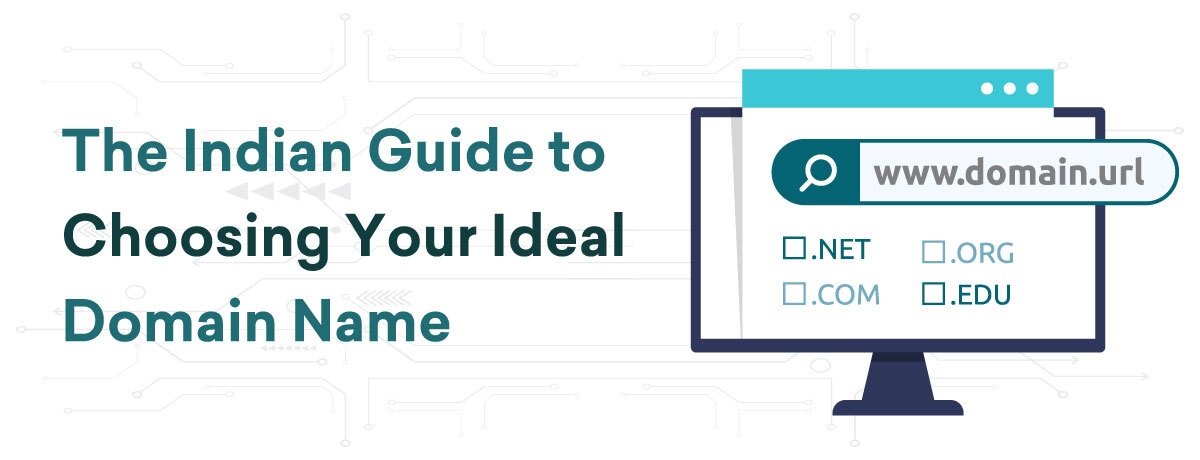
  • The Indian Guide to Choosing Your Ideal Domain Name

    The Indian Guide to Choosing Your Ideal Domain Name

    It’s safe to say that choosing the right domain name is an important part of any new project. So how can you ensure you make the right choice? Tips that are specifically catered to Indian businesses and individuals in order to help you find a domain name that will improve your brand, drive traffic, and increase your bottom line. Your domain name is the key branding element for any business and, if chosen wisely, will stay with you for years, maybe even a lifetime.

    What Exactly is a Domain Name?

    Before going into the process of selecting an excellent domain, let us clarify what it is.

    Online addresses such as google.com and bytenap.in are domain names used to access company websites, news sources, and any other gems (or oddities!) the Internet may have.

    In technical terms, a domain name is a string of characters that, through a DNS service, computer systems connected to the Internet may translate into an electronic address known as an Internet Protocol, or IP, address.

    Through a domain name registration provider like Web Hosting India, available domain names can be registered for a cost each year and for a duration of one to ten years. Once registered, you can pay its renewal fee to keep your domain active indefinitely.

    Exploring the Parts of a Domain Name

    Domain Name: The special address, such as “example.in,” that distinguishes your website. It consists of an extension and a name.

    Name: The primary domain name portion, to the left of the dot, sometimes known as the second-level domain, or SLD. Get creative—you can register any name that is offered under a particular extension! It is not case-sensitive and is limited to letters, digits, and hyphens. It is limited to 253 characters (having one that lengthy would not be feasible!).

    Extension: The last part of a domain name, like.COM or.in, on the right. Another name for it is a top-level domain, or TLD. There are currently over a thousand TLDs accessible, some are limited based on a person’s occupation or place of residence, but the majority are public and open to anyone.

    Subdomain: Neither the domain name registration process nor your domain name include this. Don’t worry about this, from your webhosting account, you may establish as many subdomains as you like!

    You will be looking for a name and extension combination that isn’t already reserved by someone else when choosing a new domain name. Although you have a lot of creative freedom when choosing a name, the extensions that registries (the organizations that oversee domain extensions) offer will restrict your options.

    If it’s accessible, I could, for instance, register MyDomainSuperCool.in as my domain name, but no registry has generated the domain extension.I’m not allowed to have the domain name MyDomain, supercool.Super Chill

    After learning about the many components of a domain name, let’s move on to the important task of choosing the ideal name.

    Tips for Choosing a Great Domain Name

    1. Mention your brand

    Try to incorporate the name of your brand into your domain. It will maintain your domain’s clarity and simplicity while contributing to its memorability.

    For instance, even if hosting.com contains keywords, Webhosting.com is a more successful domain name for the webhosting brand than it is.

    1. Make it descriptive and intuitive

    Don’t leave guests in suspense! Make your domain name easier to type and reflect the core values of your company to increase its memorability. One way to achieve this is by using helpful keywords that people might use to look for websites similar to yours.

    Among the instances are:

    ToysForToddlers.in 

    LowCostAutoRepair.com 

    AffordableHomesInVadodara.in

    Here are a few helpful tools to find the most common keywords:

    Use Google Trends to find out what is popular and which keywords are trending in relation to it.

    Ubersuggest: Find out how many times a specific keyword is searched for each month along with some related suggestions.

    Although you might be tempted to stuff your domain with keywords, Google has significantly reduced the weight it gives to keywords in recent years. However, when used as anchor texts in links, keywords contained in domains still benefit SEO.

    1. Prioritize.in and.COM domains.

    When conducting business in India, Indian consumers respond more favorably to domains ending in.in.The most well-known and widely used option globally is COM. If possible, we highly advise you to try and obtain both of them.

    If the majority of your business is conducted in India, the.in domain extension might be a better option for you because it will instantly identify you as an Indian company, unlike an Indian rival who might be using a.COM domain.

    1. Don’t make it too short; just right.

    Long names are more likely to be misspelled and might be challenging to recall. For optimal results, try to select a domain with fewer than 20 characters. However, stay away from employing slang or abbreviations that could make your domain longer but more difficult to spell.

    For instance, even though PopularSci.in is shorter, PopularScience.in is a better option.

    Remember that finding the domain online will get more difficult the shorter the domain gets. In the most popular extensions, nearly every 3- and 4-letter domain variation is already taken, and 5-letter domains are also rather rare.

    1. Think about distinct domains for each language.

    Do you speak English with guests? If so, either register two domains, one in each language, or attempt to discover a domain that could be used in both languages (very difficult, in some situations).

    The Indian Bay corporation, the oldest corporation in India, divides its website into multiple languages under one domain, theindianbay.com (English).

    Additionally, keep in mind that Indian English spelling occasionally varies from that of American or British English. Make sure the terms you’ve selected are appropriate for the market you want to target, and think about registering every possible spelling variation for your domain.

    1. Use Domain Extensions Creatively

    Use your imagination with any of the hundreds of new domain extensions that are now accessible if your domain isn’t available with.in or.com or if you want to stand out with something distinctive. Go through our domain extension categories, like “Food and Drink” or “Services,” to find more alternatives that are tailored to your web project.

    Here are a few imaginative instances:

    MontrealModern.com/art

    I adore everyone.tech

    SurprisesIn.store

    Games ComePlayVideo.games IWroteA.blog

    When you search for domains other than the “traditional” extensions, you’ll see that the availability of domains increases significantly.

    1. Make Pronouncing It Simple

    Not only would an easily pronounceable domain be easier to give verbally in person or over the phone, but it will also be more remembered and positively associated with your brand. People should be able to grasp your domain without you having to spell it.

    It is best to avoid using slang, hyphens, or digits as these can cause misunderstandings when spoken. For example, would you automatically think of “get-more4less.in” if someone told you that there were amazing offers at “get more for less dot in”? Most likely not.

    Consider registering both the word and numerical versions of your domain, such as TopTenLists.in and Top10Lists.in, if you do choose to utilize numbers.

    1. Fashion It for Local Search

    If you’re targeting a specific area (which you almost always should be!), adding in the city, region or province will help people know right away what area you serve and could increase relevance.

    Examples include:

    VadodaraPlumber.in

    HockeyFans.bombay

    1. Avoid Trademarks

    There’s a chance that your domain name violates the trademark of another company. You may still be sued for using the domain name by another company even after you’ve registered it. This can result in expensive legal disputes or force you to give up your domain name and go through the entire process again.

    Generally speaking, avoid using another company’s trademark in your domain name or causing any misunderstanding with another company’s brand (including by using misspellings or typos). If you’re looking for registered trademarks, you may also check the Indian Trademark Database.

    1. Protect Your Brand and your Visitors

    After deciding on your main domain name, you should think about securing it by registering any related secondary domains. These are referred to be defensive registrations, and they shield you from possible issues like rivals or, worse, hackers, taking advantage of your success and possibly siphoning off some of the traffic to your website.

    Many forms exist for defensive registrations, however the following are the most typical:

    widely used extensions. If it’s feasible, think about registering your domain with each of the following “classic” extensions:.IN,.COM,.NET,.ORG, and.CO.

    typos. Even among those who can spell correctly, errors inevitably occur. Examine the most frequently misspelled words and think about registering well-liked variations.

    Options. If you registered a name like EnJoysOrganicFoods.com, you might want to think about registering versions like EnJoyOrganicFood.com or EnjoyOrganicFoods.com Bilingual, as plurals and possessives can be confusing. It’s a wise idea to register your domain in French even if your website is just in English since you could ultimately wish to expand into the French Canadian market.

    Bear in mind that defense registration charges may mount up quickly, with an average price tag domain each year. Your risk tolerance, the amount of money your website is bringing in, and the value of the brand you are employing will all influence how much you should spend on it.

    1. Make Use of a Powerful Domain Spinner

    It doesn’t follow that someone hasn’t already registered a particular domain name just because it doesn’t have an active website. Because it offers domain recommendations and alternatives, a provider’s domain availability search tool—often referred to as a domain spinner—is the most accurate approach to find out if the domain is actually available for registration.

    A competent domain spinner ought to:

    Give quick access to the domain you looked for.

    Look up several extensions for your domain and make recommendations.

    Make it simple and quick for anyone to register one or many domains.

    Reduce pointless distractions, like service upsells.

    The Indian domain search tool assists you in locating the ideal domains for your requirements by offering quick results and searches through the most popular extensions.

    Conclusion

    Selecting the fastest WordPress hosting is critical for optimizing user experience, improving SEO rankings, and ensuring scalability. Cloudways emerges as a top choice, providing cloud-based solutions that prioritize speed, reliability, and security. By focusing on key performance factors and using tools like Pingdom, GTmetrix, and Google PageSpeed Insights, you can ensure your WordPress site operates efficiently, meeting both user expectations and search engine requirements.