Introduction: Why Many Startups Fail with Cloud Infrastructure
Every startup has dreams. Whether you are building a SaaS platform, launching a mobile app, building an eCommerce marketplace or developing an AI-powered solution, your success is heavily dependent on your technology infrastructure.
Sadly, many startups focus on the product itself for a long time and forget the importance of a well-designed cloud environment. At first everything looks good. The website loads quickly, users can access the application and operational costs are manageable. But as the business grows, problems begin to emerge.
Cloud bills are still rising unexpectedly month after month. Applications slow down during traffic spikes. There is an issue of security. System outages erode customer confidence.
These problems often are not product problems but are poor in the cloud’s planning.
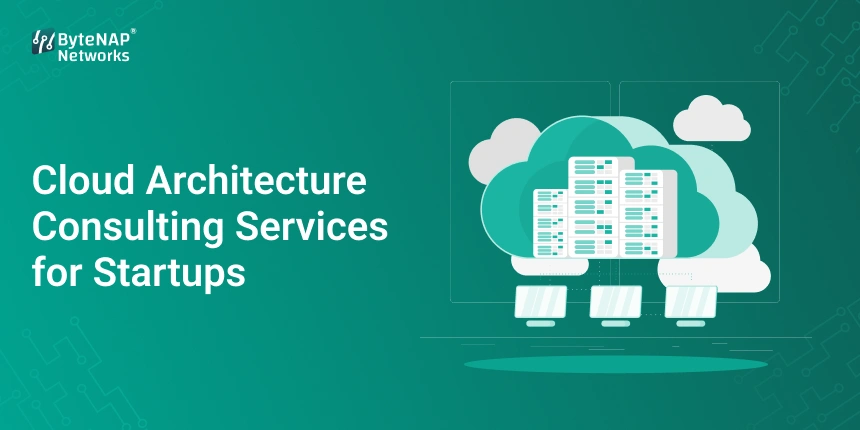
This is where the importance of Cloud Architecture Consulting Services for Startups comes into play. Professional cloud consultants help startups build scalable, secure and cost-effective cloud infrastructure from the get-go so that there are no costly mistakes down the road.
In this guide, you’ll find out about cloud architecture consulting, why startups need it, how it works, and how the right cloud strategy can accelerate business growth while mitigating risks.
What Are Cloud Architecture Consulting Services?
Cloud architecture consulting services offer expert advice on designing, implementing, optimising and managing cloud infrastructure.
A cloud consultant assesses a startup’s technical needs and designs a tailored cloud strategy that addresses their current needs and sets them up for future growth.
Instead of just placing servers, consultants focus on creating a complete cloud architecture that
includes:
- Computing resources
- Storage of data
- Security System
- Network Configuration
- Backup Options
- Monitoring tools
- Scalability framework
The idea is to create a solid cloud computing architecture that allows startups to operate efficiently, but also allows flexibility for changes as the business grows.
Cloud Architecture Knowledge
Before we get into the nitty-gritty of consulting services, let’s first understand what we mean by cloud architecture.
Cloud architecture is the design and configuration of all cloud-related components that a software application or business system uses.
Think of cloud architecture as the design of a building. Architects design buildings for the occupants of today and tomorrow; likewise, cloud architects design digital infrastructure for the applications and users of today and tomorrow.
Key Components of Cloud Architecture
Presentation Layer
This is what they see first hand, customers and employees.
Examples of this are:
- Web sites
- Mobile Apps
- Client portals
- User Dashboards
Back-End Layer
This includes the systems running behind the scenes.
Examples are:
- Databases
- Virtual machines
- APIs
- Storage devices
- Processing machines
Network Layer
Networking connects different cloud resources and allows data to flow efficiently between services.
Security Layer
This layer protects sensitive information by:
- Authentication
- Encryption
- Firewalls
- Access Control
All these components work together when a properly designed cloud based architecture is in place.
Why startups need consulting services for cloud architecture
Many startup founders think cloud infrastructure is simple, because the cloud makes it easy to set up.
It’s easy to launch resources, but it takes expertise to build an optimised cloud environment.
Here are the key reasons why startups need consulting services.
Steer Clear of Costly Infrastructure Mistakes
It’s a common startup mistake to build out infrastructure without a long term plan.
For example:
- Servers over-allocated
- Purchasing services you do not require
- Using inefficient storage options
- Developing redundant resources
Such mistakes lead to considerable operating costs over time.
Cloud consultants help startups avoid these expensive mistakes from day one.
Prepare for Future Growth
Many applications are fine serving hundreds of users.
The problem comes when you have thousands and millions of users.
Startups without a scalable architecture often struggle with:
- Performance is slow
- Application Crash
- Database traffic jams,
- Bad user experiences
The systems the consultants design can scale automatically as demand increases.
Security Improvements
The number of threats to cyber security is increasing year by year.
Small businesses are often targeted because it is assumed they have less secure systems in place.
- Cloud consultants
- Secure Access Control
- Data encryption
- Threat monitoring
- Frameworks for compliance
- Disaster recovery planning
This is to aid in securing customer information and business assets.
Lower Technical Complexity
Cloud environments can get complicated quickly.
Managing:
- Databases
- Storage systems
- Virtual networking
- Security policies
- Instrumentation
requires specialised knowledge.
Consultants make cloud management easier and let founders focus on growing the business.
Top Benefits of Cloud Architecture Consulting Services
Partnering with experienced cloud consultants offers many business benefits.
Cost Optimisation
One upside is better cloud spending management.
Consultants identify opportunities for cost savings through:
- Resource Optimisation.
- Implementing auto-scaling
- Storage Administration
- Load balancing
This means startups only pay for the resources they are using.
Fast Product Launches
In competitive markets, speed counts.
Consultants take the headache out of infrastructure deployment allowing development teams to focus on developing products not managing servers.
So:
- Accelerate applications
- Shorten development cycles
- Improves time to market
More Reliability
Downtime can cost you customer trust and revenue.
Cloud consultants architect systems to be highly available and reduce the amount of disruption.
This typically includes:
- Additional servers
- Load-balancing
- Back-up systems
- Disaster recovery plans
Better User Experience
Fast loading apps create better customer experiences.
Optimised cloud architecture enhances:
- Speed of Website
- Application responsiveness
- Performance of databases
- Universal access
Happy users are more likely to turn into loyal customers.
Better Business Agility
Start-ups need to pivot quickly.
What businesses can do: A flexible cloud architecture lets businesses:
- Release new features fast
- Expand into new markets
- Managing seasonal peaks of traffic
- Adopt innovative technologies
The way cloud architecture consulting works
While each consulting project is unique, most proceed in a similar fashion.
Step 1: Discover Business
Consultants start with understanding:
- Company targets
- Product specifications
- Target Market
- Growth Projections
This is the context in which infrastructure planning takes place.
Step 2: Evaluate the Infrastructure
If the startup has pre-existing cloud resources, consultants assess:
- Current Architecture
- Performance problems
- Security Flaws
- Costly inefficiencies
That highlights areas for improvement.
Step 3: Cloud Strategy Formulation
Next, consultants create a cloud roadmap.
This comprises:
- Pick a cloud platform
- Planning of resources
- Security needs
- Scaling approaches
Step 4: Design the architecture
In this phase specialists develop a detailed architecture plan that includes:
- Compute Storage
- Databases
- Networking
- Security controls
Each element is designed to support business goals.
Step 5: Deploy and Migrate
Infrastructure is deployed according to best practices.
Consultants help startups move from existing systems to ensure a smooth migration with minimal disruption.
Step 6: Monitoring and Optimization
The cloud environment is always in need of improvement.
Consultants are keeping a watchful eye:
- Use of Resources
- Application performance
- Risks to security
- Cost of infrastructure
This leads to long-term efficiency.
The Real Startup Situation
Imagine a startup that develops a subscription-based fitness app.
The company expects to have 500 users at first.
The founders built a simple cloud environment and all is well.
The marketing campaign worked and overnight the number of user registrations climbed to 50,000.
Problems start to emerge:
- Loading video content takes a long time.
- Login requests are not successful
- Databases get overloaded
- Cloud costs balloon
The startup has consultants for cloud architecture.
The consultants redesign the infrastructure like this:
- Implement auto-scaling servers.
- Calibration of data bases
- Leveraging content delivery networks
- Improving monitoring systems
A few weeks later:
- Performance is greatly improved
- Reduces downtime
- Cloud spending plateau
- Customer Satisfaction Rises
This scenario shows how the right cloud architecture is a business success factor.
Top Cloud Platforms for Startups
Most cloud consultants are employed by large providers.
Amazon Web Services (AWS)
AWS provides:
- Wide variety of service options
- Worldwide infrastructures
- Programs for startups
- Good scalability
Perfect for fast growing technology companies.
Microsoft Azure Cloud
Azure works well with Microsoft products.
Benefits:
- Security for enterprise-grade
- Support for Hybrid Cloud
- Powerful analytics tools
Popular with B2B startups.
Google Cloud Platform (GCP)
Google Cloud is recognised for:
- Analysis data
- Machine Learning Service
- Competitive rates
- Developer friendly tools
Great for AI and data-driven start-ups.
Top Mistakes Startups Make In Absence Of Cloud Consulting
Many startups create long-term problems without knowing it.
Wrong architecture selection
Not every app needs the same model of infrastructure.
Poor architectural choices often kill growth.
Security First Ignored
Security should not be an afterthought.
It costs a lot more to fix vulnerabilities later.
Resources Over-Provisioning
So, many startups buy up resources “just in case.”
This results in unwanted costs.
Ignoring Monitoring
Without monitoring systems, performance problems often go undetected until customers start complaining.
Not planning for scalability
Growth should be anticipated and prepared for from the outset.
Selecting the Ideal Partner for Cloud Architecture Consulting
All consulting providers do not offer the same value.
Take the following into account.
Early-stage Experience
Look for consultants who know the challenges and budgets of startups.
Multi Cloud Knowledge
The best consultants can work across cloud platforms.
Security Awareness
Ensure the provider has strong cybersecurity skills.
Results That Work
Ask clients for case studies and success stories.
Continued Support
Cloud optimization is not a one-time project; it is an ongoing process.
Why Cloud Architecture Is More Important Now Than Ever
Digital infrastructure is what powers modern business.
What Customers Want:
- Quick websites
- Trustworthy applications
- safe transactions
- Availability 24/7
Poor cloud architecture impacts everything about the customer experience.
On the other hand, a solid cloud basis supports:
- Growth
- Innovation
- Profitability
- Competitive Edge
For startups in highly competitive markets, cloud architecture can be the difference between successfully scaling and running into technical limitations.
FAQs (Frequently Asked Questions)
What are cloud architecture consulting services ?
Cloud architecture consulting services assist businesses in designing, deploying, optimising, and managing cloud infrastructure to enhance performance, security, scalability, and cost efficiency.
Why Startups Should Invest in Cloud Architecture Consulting ?
Startups benefit from expert guidance that reduces infrastructure costs, increases reliability and security, and prepares systems for future growth.
What is the architecture of Cloud Computing ?
Cloud computing architecture is the architecture that integrates servers, databases, networking, storage and applications into a single cloud environment.
How cloud based architecture improves scalability?
With cloud based architecture, resources can automatically scale up or down depending on demand, keeping applications responsive even during traffic spikes.
What is the best cloud platform for startups?
All three are good options: AWS, Microsoft Azure and Google Cloud Platform. The best choice depends on your business objectives, budget and technical requirements.
Conclusion
It’s hard enough building a startup without having to deal with infrastructure failures, security risks and unpredictable cloud costs. A well designed cloud architecture provides you with the foundation you need to grow sustainably, perform better and succeed over the long term.
Professional Cloud Architecture Consulting Services for Startups enable companies to build scalable, secure, and cost-efficient cloud environments to fuel innovation and future growth. From choosing the right platform to optimising performance and controlling costs, cloud consultants are key in helping startups grow with confidence.
Successful startups don’t wait for infrastructure issues to arise before they respond; they invest in strategic cloud planning up front.
Want to grow your startup with a professional cloud architect?
If you want to launch a new application, plan a cloud migration, or are simply looking to optimize the infrastructure you already have in place, now is a great time to collaborate with experienced cloud architecture consultants. Contact our team today to learn how a custom cloud computing architecture can help your startup lower costs, enhance performance and speed up growth.